

Natural Hair Shrinkage: What It Is and How to Stretch Your Curls


Natural Hair Shrinkage: What It Is, Why It Happens, and How to Stretch Your Curls
By Carol's Daughter — Updated May 2026
Quick Answer: Natural hair shrinkage happens when curls contract as they dry and lose moisture, causing your hair to look shorter than its actual length. It's not damage — it's a sign your curls are healthy and hydrated. Tight curl patterns (4A–4C) shrink the most, sometimes up to 75%. To minimize shrinkage and stretch your curls, focus on consistent moisture, gentle detangling, sealing techniques like the LOC method, and protective overnight styling.
If you've ever spent an hour stretching, twisting, and pulling every curl into place — only to watch it spring right back as soon as it dries — you already know shrinkage.
It's one of the most frustrating things about natural hair. But here's the truth most people miss: shrinkage isn't bad. It's actually one of the clearest signs that your curls are healthy and properly hydrated.
This guide breaks down what shrinkage is, why it happens, and the techniques that actually help stretch your curls without damaging them.
What Is Natural Hair Shrinkage?
Natural hair shrinkage is when your curls contract from a stretched, elongated state into a tighter, more compact coil as they dry.
Your curl pattern isn't changing — each strand is just losing the water weight that was keeping it stretched out. Once the moisture evaporates, the curl returns to its natural shape.
You can lose anywhere from 30% to 75% of your visible length to shrinkage, depending on your curl pattern. That bra-length hair you have when wet might dry to your shoulders. That doesn't mean your hair stopped growing. It just means it's coiling tightly the way it's supposed to.
Why Does Hair Shrinkage Happen?
Think of your hair like a sponge.
A dry sponge is small and compact. Add water and it expands, softens, and stretches. Let the water evaporate and it shrinks back to its original size.
Your hair works the same way. When water enters the cuticle, each strand gets heavier and more pliable, which pulls the curl into a more elongated shape. As the water evaporates, the strand loses that weight and contracts back to its natural curl pattern.
This is also why shrinkage is a built-in moisture meter. If your curls are bouncing back tighter than usual, that's your hair telling you it's time to rehydrate.
Pro tip: Shrinkage can also point to your hair's porosity. If water flies in and out of your strands quickly, leaving you with constant shrinkage even after deep conditioning, you may have high porosity hair that needs heavier sealants and protein.
Which Hair Types Shrink the Most?
All curl patterns shrink, but tighter coils shrink more dramatically.
- Type 1 (straight) — almost no shrinkage
- Type 2 (wavy, 2A–2C) — minimal shrinkage; significant shrinkage may signal damage or high porosity
- Type 3 (curly, 3A–3C) — moderate shrinkage, around 20–40%
- Type 4 (coily, 4A–4C) — the most shrinkage, often 50–75% or more
If you're noticing significantly more shrinkage than usual for your curl type, that's worth paying attention to. It can mean your hair is losing moisture faster than it's holding onto it — a sign to deep condition or check for damage.
How to Stop Hair Shrinkage (Or At Least Reduce It)
You'll never eliminate shrinkage completely — and you shouldn't want to. Some shrinkage is healthy.
What you can do is reduce excessive shrinkage and stretch your curls strategically when you want more length to work with. The fundamentals: moisture, gentle handling, and the right finishing techniques.
1. Moisturize While You Wash
Your hair's moisture story starts in the shower. Stripping shampoos remove your natural oils along with the dirt, leaving your hair drier and more prone to dramatic shrinkage.
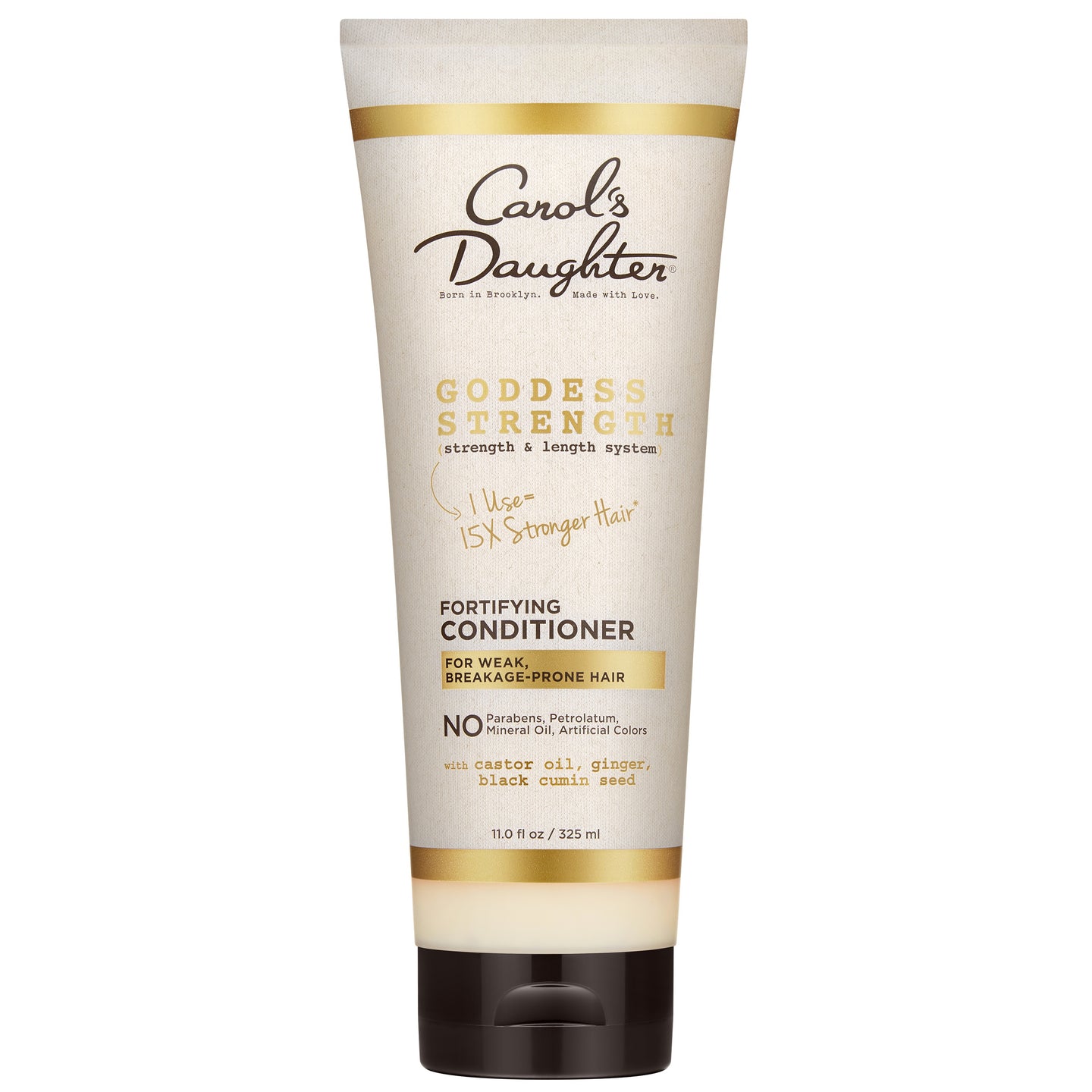
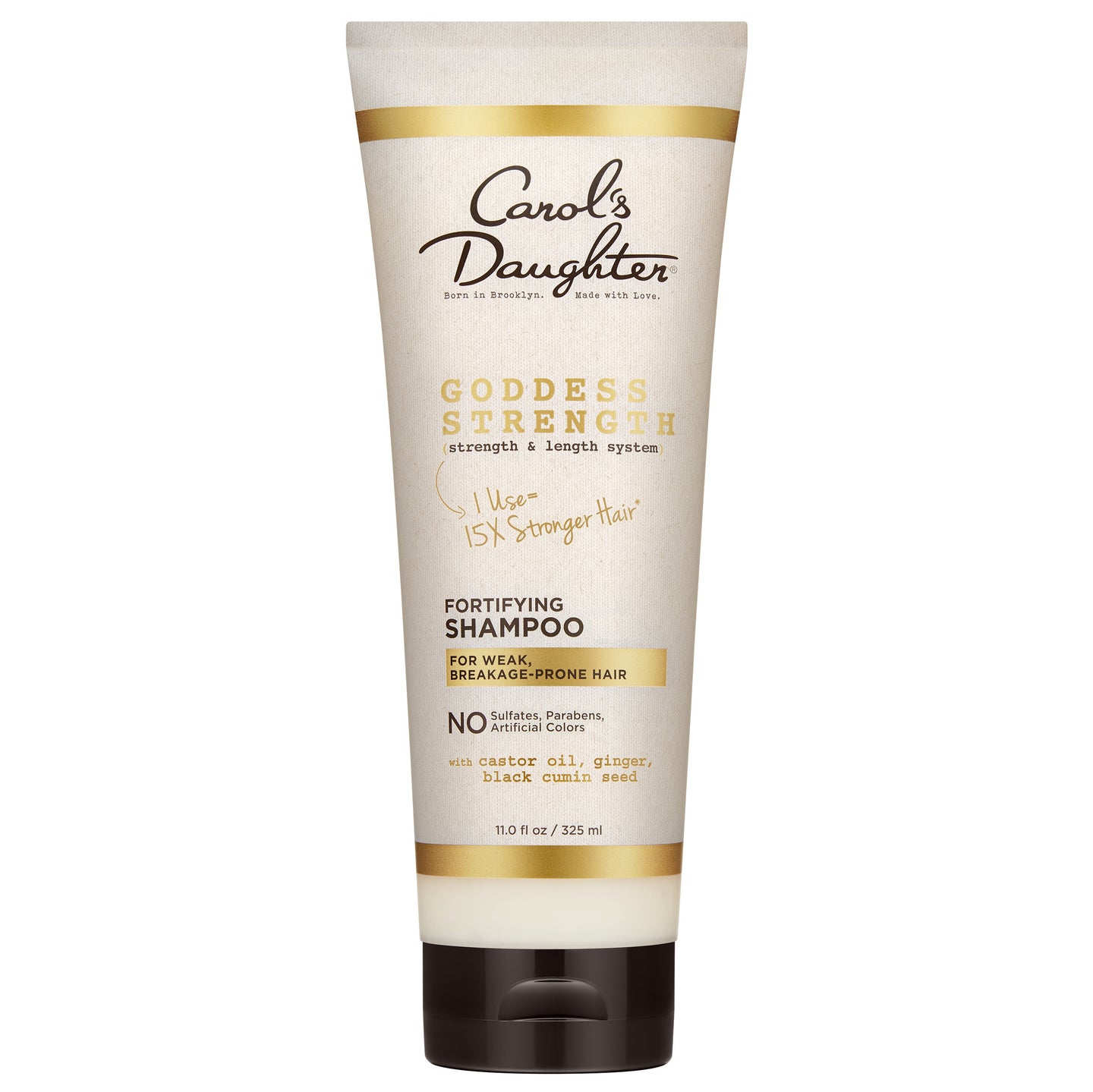
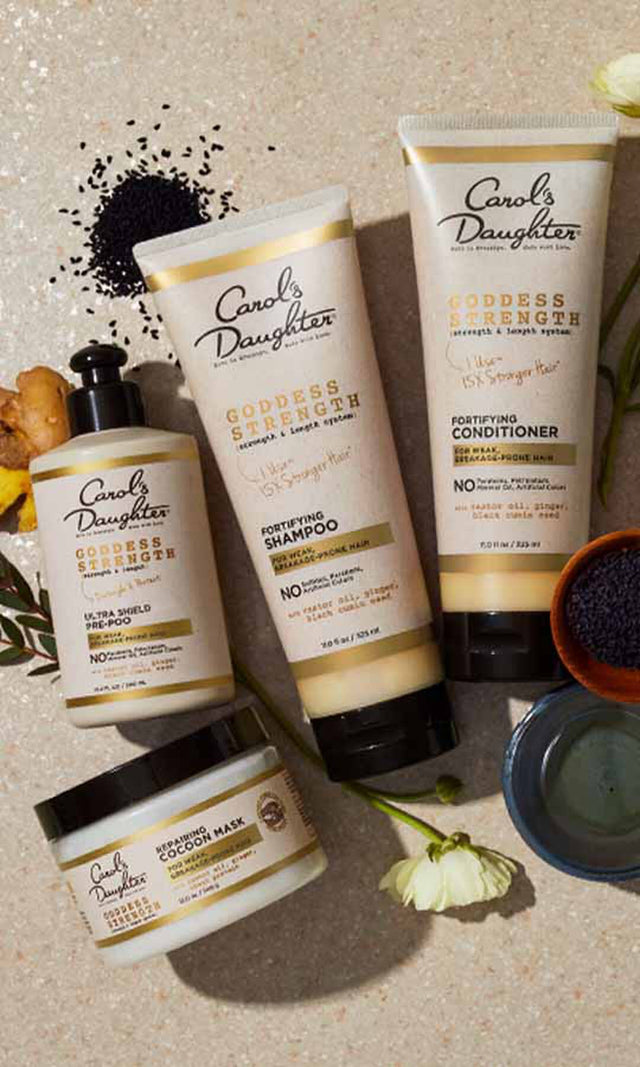
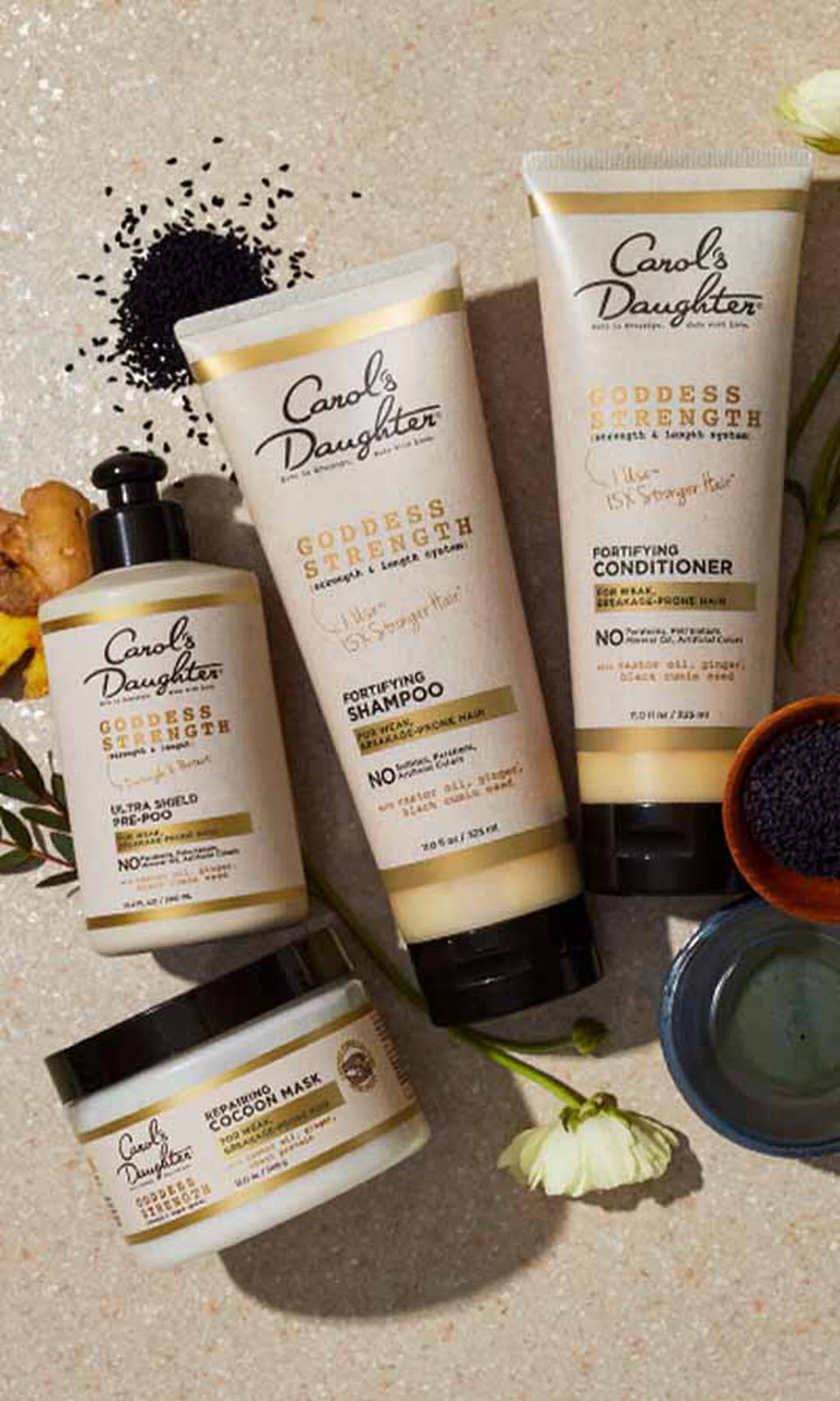
Switch to a sulfate-free formula like the Goddess Strength Fortifying Shampoo with Castor Oil, which cleanses gently while supporting strength and reducing breakage. Pair it with the Goddess Strength Fortifying Conditioner to start adding moisture back in immediately.
The Goddess Strength line delivers up to 7x stronger hair and 86% breakage reduction with regular use — and stronger strands hold onto moisture longer.
2. Detangle Thoroughly
Tangled hair shrinks more than smooth hair. Knots prevent your products from distributing evenly, which means dry patches that spring up tighter as they dry.
A gentle detangling sequence:
- Saturate hair with water and conditioner or a leave-in
- Section into 4–6 parts
- Use fingers first to break up large tangles
- Follow with a wide-tooth comb, working from ends to roots
The Goddess Strength True Stretch Defining Cream is built specifically for this — castor oil, black cumin seed oil, and ginger work together to deeply moisturize and elongate curls for up to 48 hours, so you stay smooth and stretched between wash days.
3. Layer Your Moisture
The more moisture your hair holds, the longer your curls stay stretched. Layering products is how you build that moisture in deeply.
An anti-shrinkage product layering order:
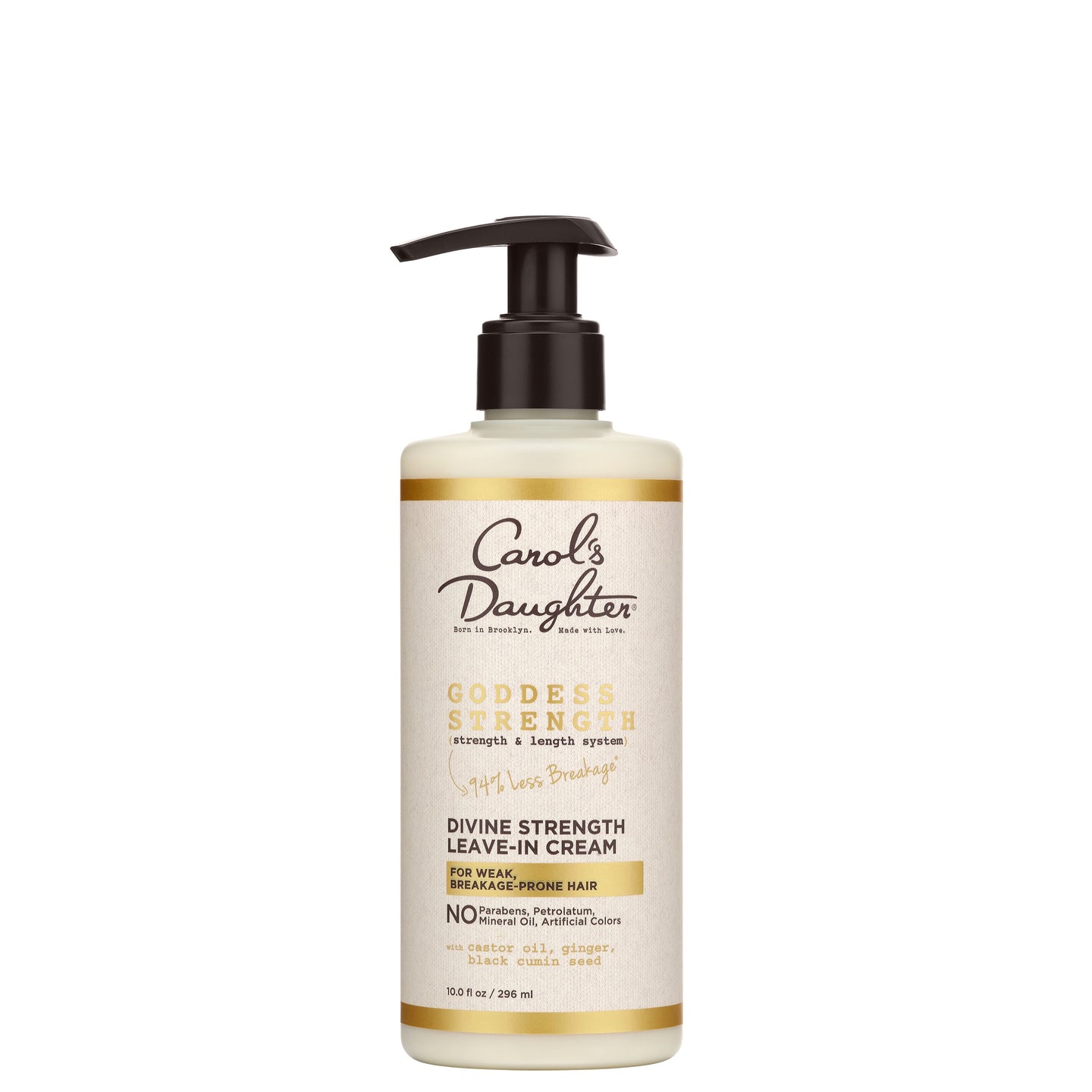
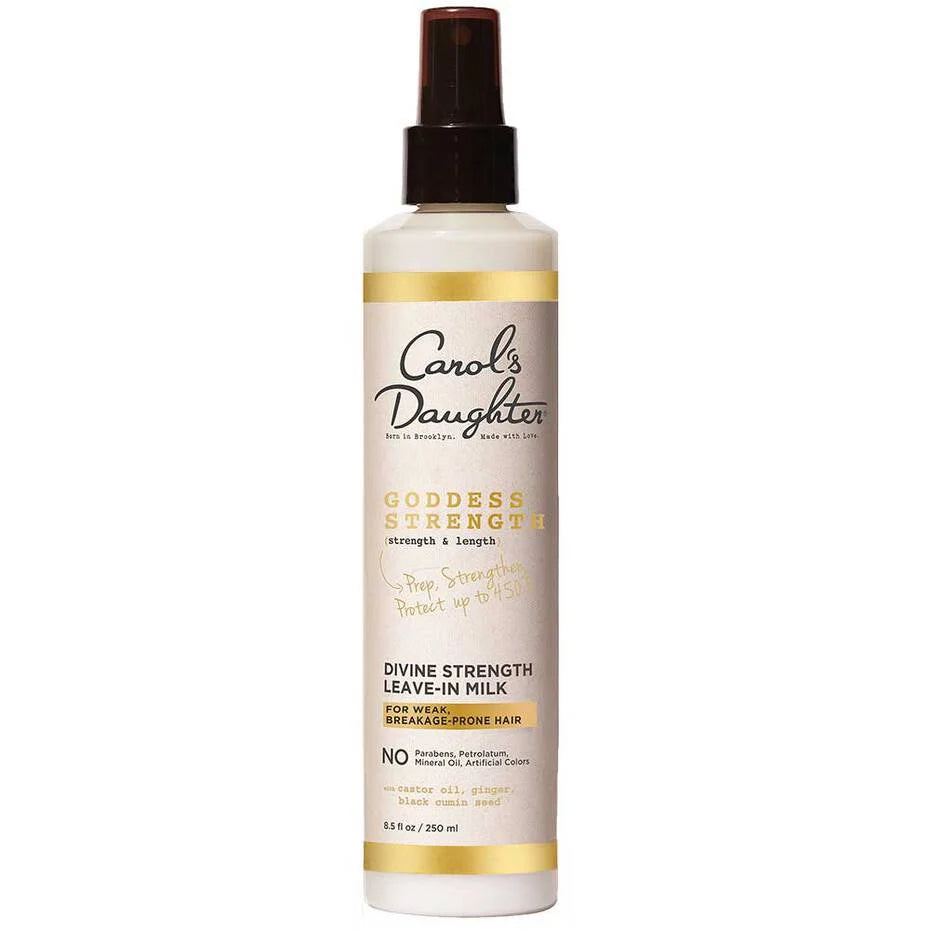
- Leave-in cream — the Goddess Strength Divine Strength Leave-In Cream for the foundation of moisture
- Hair oil to seal the cuticle
- Styling cream or butter to define and weigh hair down
The Goddess Strength 7-Oil Blend Hair & Scalp Oil is built around castor oil — one of the heavier oils, which helps weigh curls down and stretch them naturally.
4. Use a Weekly Hair Mask
Regular deep conditioning keeps moisture levels high enough that your hair doesn't shrink up the moment it dries.
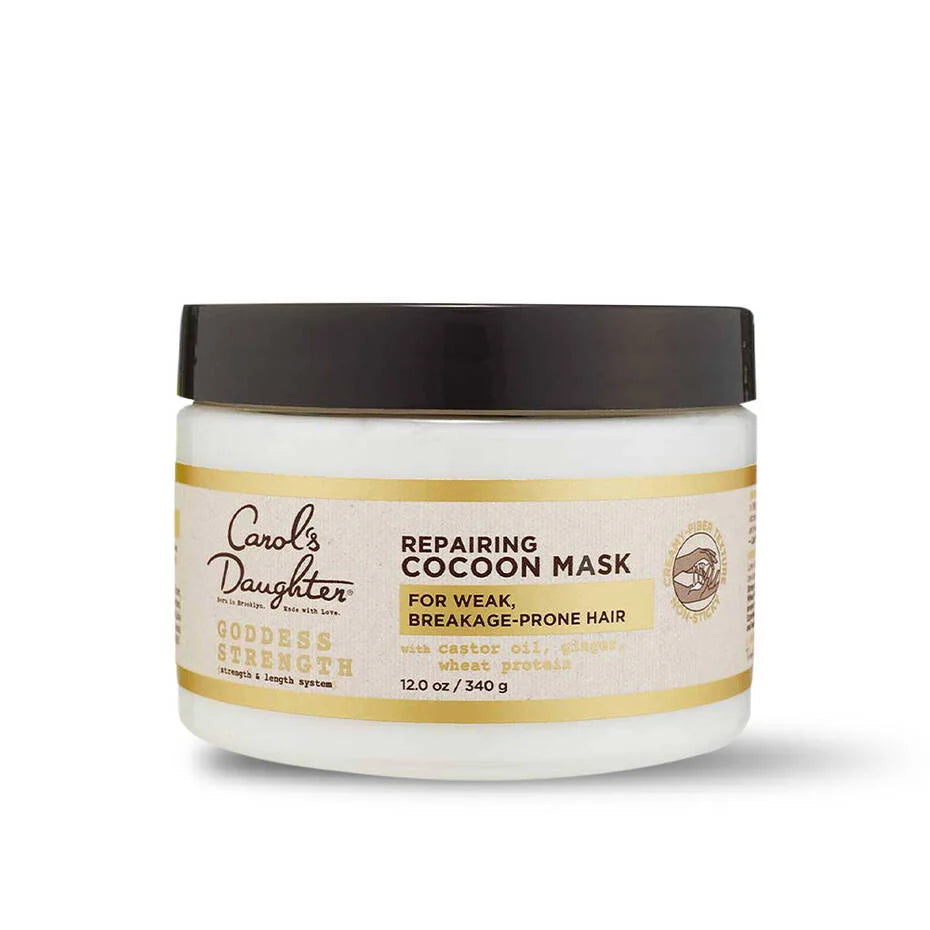
The Goddess Strength Cocoon Hydrating Hair Mask delivers an intense moisture treatment that helps your hair retain hydration longer. Use weekly for the best results, especially if you have 4A–4C hair.
5. Stretch Your Curls Manually
Sometimes you just want length without heat. There are a few heat-free stretching techniques worth trying:
- The LOC method — Leave-in, Oil, then Cream, applied in that order to lock moisture in
- Banding — section hair and wrap small elastic bands every couple of inches to keep strands stretched as they dry
- Threading — wrap sections of hair with thread to stretch without heat
- Braid-outs and twist-outs — install braids or twists on damp hair, let them dry fully, then unravel for stretched curls
Once your hair is dry, a gentle pick at the roots can lift compacted curls without disrupting your definition.
6. Protect Your Hair While You Sleep
Eight hours of friction against a cotton pillowcase pulls moisture out of your hair, which means more shrinkage by morning.
Two simple swaps:
- A satin or silk pillowcase
- A satin bonnet or scarf
For longer hair, pineappling — gathering your curls loosely on top of your head with a soft scrunchie — keeps your strands stretched and protected overnight. Take it down in the morning and your curls have more length and volume.
Find Your Personalized Routine
Knowing your curl type is the first step to building a routine that works with your shrinkage instead of fighting it.
Take the Curl Quiz → A 5-step quiz that identifies your hair type, main concerns, and the products built for your texture.
Frequently Asked Questions About Hair Shrinkage
Is hair shrinkage bad?
No — shrinkage is a natural and healthy feature of curly and coily hair. It actually signals that your curls are properly hydrated and your hair pattern is intact. Shrinkage only becomes a concern when it's more dramatic than usual, which can point to dryness or damage.
How do I know if my hair has shrinkage or if I'm losing length?
Stretch a damp section of your hair gently. If it elongates significantly and bounces back when released, that's shrinkage. If your hair stays the same length wet and dry, you may be experiencing length loss from breakage rather than shrinkage. Trims and gentler handling help with breakage; moisture helps with shrinkage.
Does shrinkage mean my hair is healthy?
Often, yes. Curls that shrink up dramatically when wet and stretch out fully when wet are usually healthy — they're holding onto moisture and snapping back into their natural pattern. Hair that doesn't shrink at all when it should may be over-processed, low-porosity, or weighed down with buildup.
Can I permanently stretch my curls?
No, and you wouldn't want to. Permanent stretching usually means heat damage or chemical relaxing, both of which alter the curl pattern permanently. Heat-free stretching methods (banding, threading, twist-outs) give you length without damage, and the stretch lasts until your next wash.
Why does my hair shrink more in humidity?
Humid air actually adds moisture to your hair, which can make some textures swell, frizz, and curl up more tightly. If your hair shrinks more on humid days, you're seeing your natural curl pattern at its most hydrated — a styling cream or balm with sealing ingredients can help your stretched style hold.
Ready to give your curls more length and life?
For moisture and strength → Shop the Goddess Strength collection
Browse by your hair concern → Shop the hair shrinkage collection
Not sure where to start? → Take the Curl Quiz