

6 Ways To Stretch Natural Hair Without Heat


6 Ways to Stretch Natural Hair Without Heat
By Carol's Daughter — Updated May 2026
Quick Answer: You can stretch natural hair without heat using 6 main techniques: Bantu knots, flexi rods, perm rods, twist-outs, braid-outs, and banding. All work by setting hair in a stretched position while it dries, then unraveling for elongated curls or waves. Heatless stretching combats shrinkage without the risk of heat damage that comes from blow-drying or flat-ironing. Each method takes a few hours to overnight to fully set, and most can be worn for 5–7 days before needing a refresh.
Heat-styling is one of the fastest ways to damage natural hair — and the temptation is real every time you want to see your hair stretched out.
Good news: you don't need heat to fight shrinkage.
There are 6 reliable heatless stretching methods that will give you length, definition, and bounce — without the heat damage risk that haunts every naturalista. Here's how to do all six.
Why Stretch Natural Hair at All?
Natural hair experiences shrinkage — the tendency for curls to coil up tight when dry, making hair appear shorter than its actual length.
Shrinkage isn't damage. It's just physics — your curls are doing what curls do. But for some styles, you want length and elongation:
- Showing off length — your hair is longer than it appears
- Specific styles — buns, updos, and pulled-back looks need stretch
- Reduced tangling — stretched hair tangles less
- Versatility — stretched hair styles into more variations
For more on understanding shrinkage, see our complete guide to natural hair shrinkage.
How to Prep Hair Before Heatless Stretching
Every method starts with the same prep work.
Step 1: Wash and Condition
Start with a clean canvas. Use a moisturizing sulfate-free shampoo and a hydrating conditioner. For wash-day guidance, see our complete guide to washing curly hair.
Step 2: Detangle Thoroughly
Heatless stretching only works if your hair is fully detangled. Tangles will create breakage during the setting process and ruin the final look.
Step 3: Apply Moisturizing Stylers
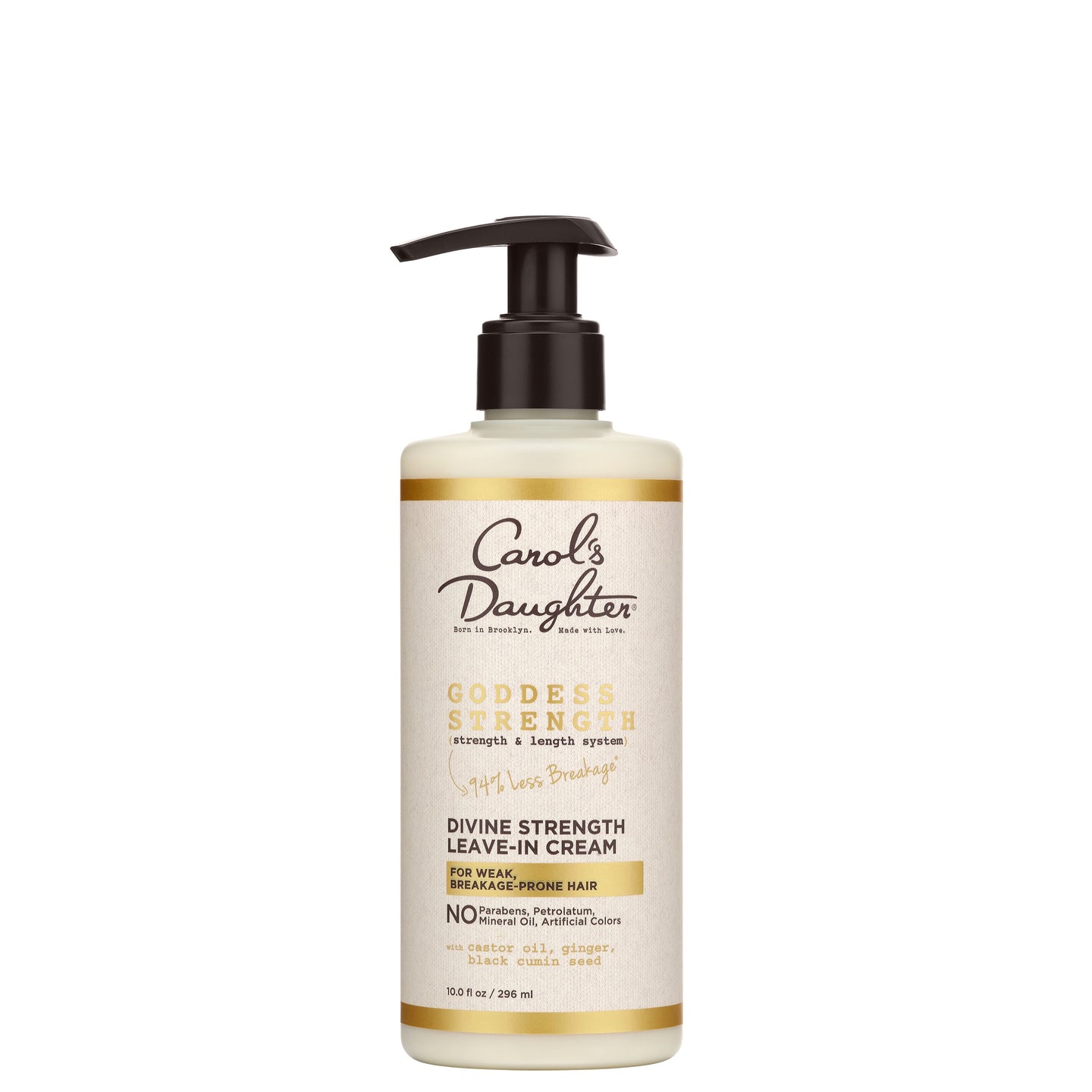
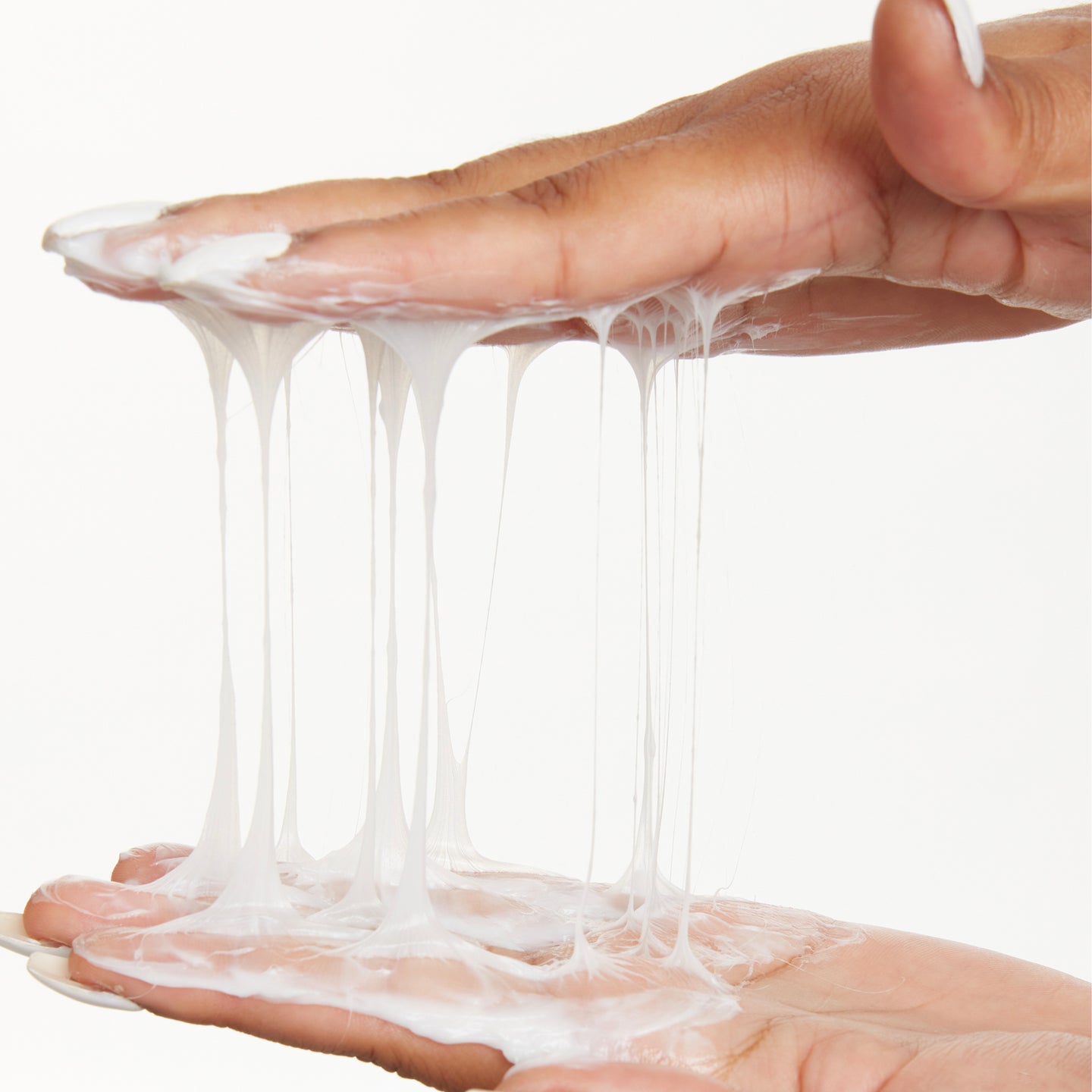
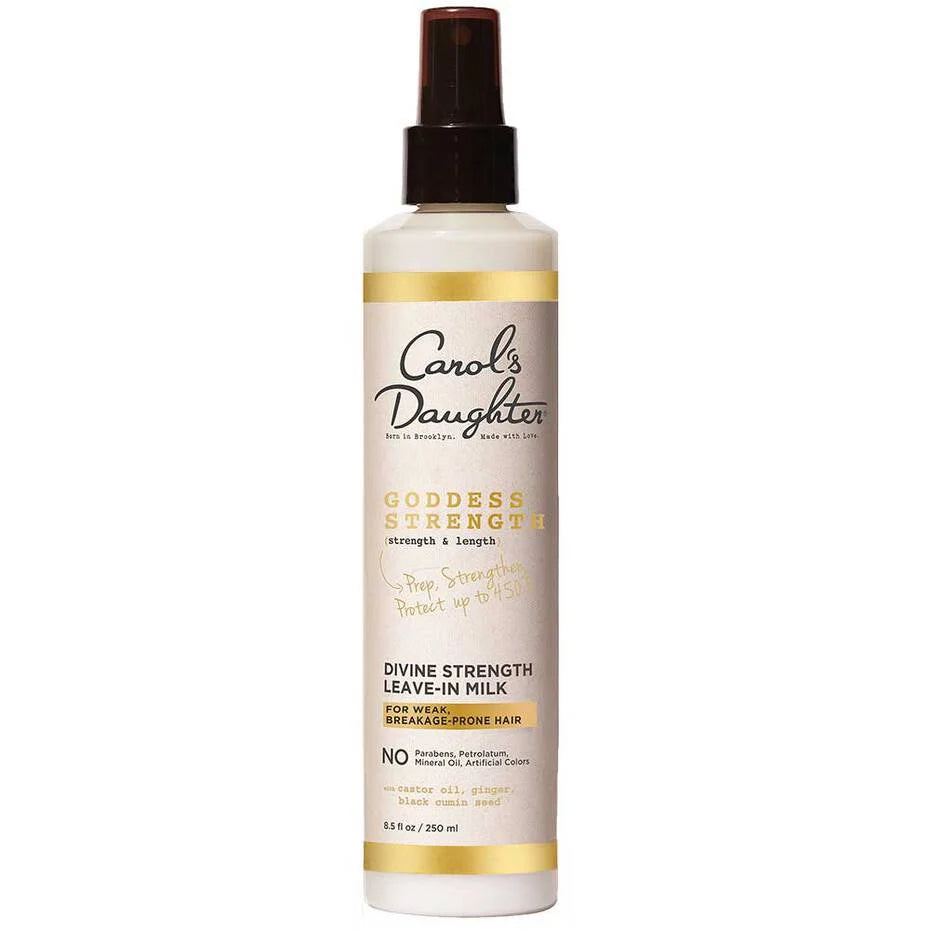
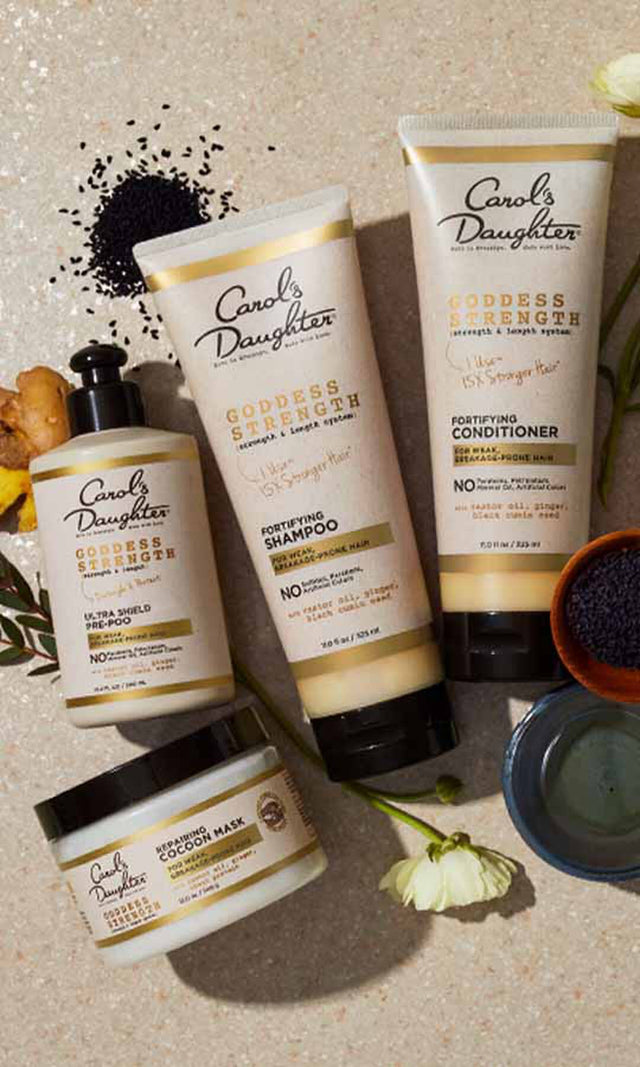
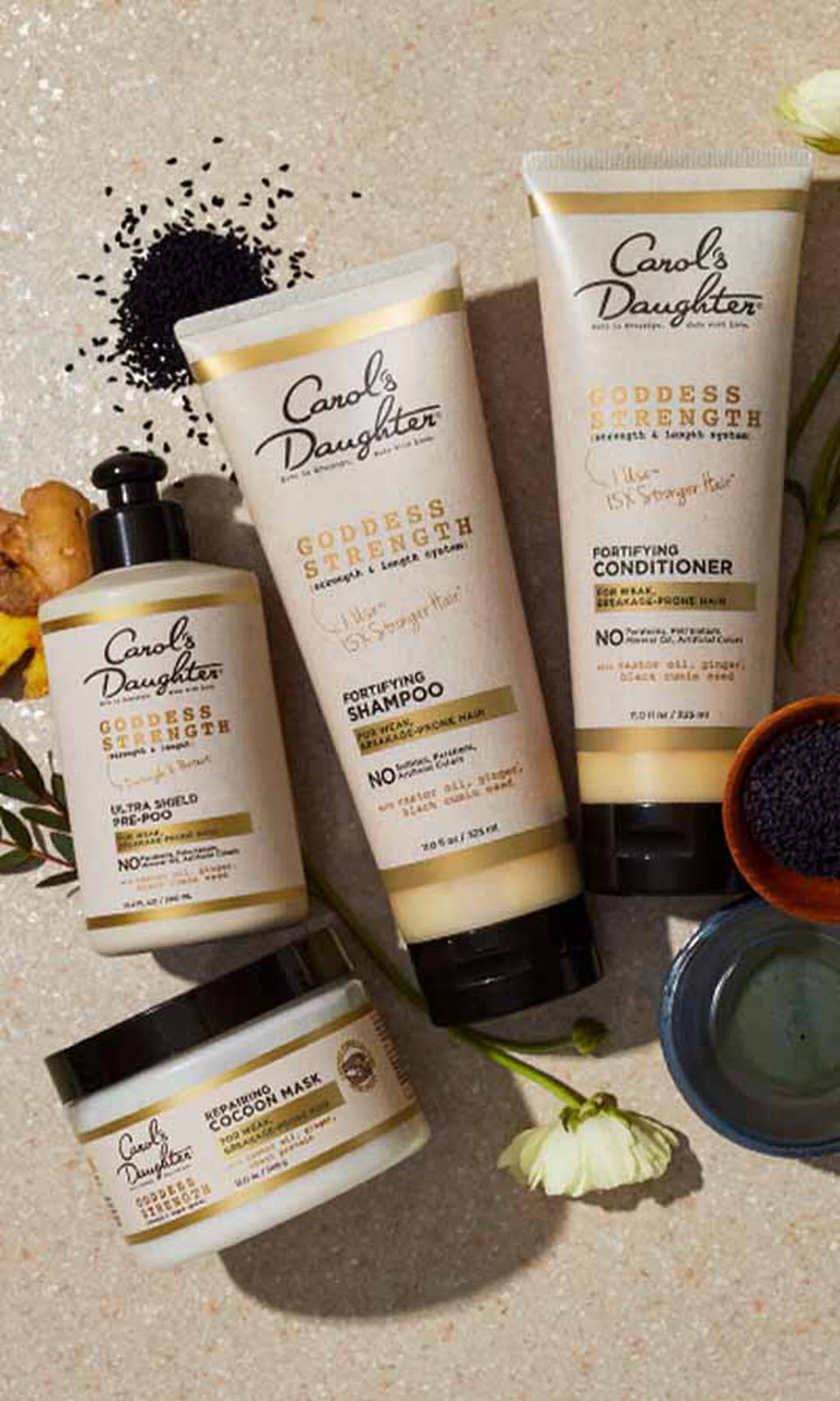
Apply a moisturizing leave-in and a defining cream before stretching. The Goddess Strength Divine Strength Leave-In Cream with Castor Oil provides moisture and helps hair hold the stretched shape.
For added shine and hold once your set is done, finish with Mimosa Hair Honey Shine Pomade — a classic Carol's Daughter pomade that adds gloss without weight.
Find Your Personalized Routine
Different curl types respond to different stretching methods. The Curl Quiz helps you understand your hair before you experiment.
Take the Curl Quiz → A 5-step quiz that identifies your hair type, main concerns, and the products built for your texture.
6 Heatless Stretching Techniques
1. Bantu Knots
A traditional style that doubles as a stretching technique.
How it works: Hair is divided into sections, each tightly twisted into a knot at the scalp. As the hair dries in the wound position, it stretches.
How to do it:
- Divide damp hair into sections (4–12 depending on desired curl size)
- Twist each section tightly in one direction
- Wrap the twisted section around itself to form a knot
- Secure with a bobby pin, or tuck the ends under the base of the knot
- Let dry completely (overnight is best)
- Unravel for defined spiral curls
Best for: All curl types, but especially good for type 4 hair. Doubles as a chic protective style you can wear during the setting process.
2. Flexi Rods
Foam rods that wrap around hair to create defined spirals without heat.
How it works: Hair is coated in styling product and wrapped around a flexible foam rod. The rod's curve sets the spiral shape as hair dries.
How to do it:
- Section damp hair into manageable pieces
- Apply styling cream (the Goddess Strength Divine Strength Leave-In Cream with Castor Oil works well)
- Wrap a small section of hair around the rod, starting from the ends and rolling toward the scalp
- Bend the bottom end of the rod upward to secure
- Let dry completely
- Unroll carefully, following the spiral pattern
Best for: All curl types. Great for transitioning hair, type 3 hair, and anyone wanting bouncy defined curls.
For the full walkthrough, see our complete guide to flexi rods on natural hair.
3. Perm Rods
Similar to flexi rods but smaller — creating tighter, more defined curls.
How it works: Same principle as flexi rods, but with a smaller diameter rod that creates a tighter curl pattern.
How to do it:
- Section damp hair
- Apply styling cream throughout
- Wrap each section around the perm rod
- Lock the rod's end attachment in place
- Let dry completely
- Unroll following the spiral
Pro tip: For a more voluminous result, separate each curl into 2–3 pieces after unrolling and fluff the roots with a pick.
Best for: Type 3 to 4 hair wanting maximum curl definition. Great for short hair where flexi rods are too long.
For more, see our complete guide to perm rods on natural hair.
4. Twist-Out
One of the most popular natural hairstyles — and a powerful stretching technique.
How it works: Two-strand twists are installed on damp hair, allowed to fully dry, then unraveled to reveal defined, stretched waves.
How to do it:
- Section damp hair into equal parts
- Apply leave-in and styling cream to each section
- Split each section into two strands and twist them together
- Secure the end by twirling around your finger and sealing with oil
- Let dry completely (overnight ideal)
- Carefully unravel each twist
Wear options:
- Wear the twists themselves as a style for 1–2 weeks
- Unravel for a defined twist-out (lasts 5–7 days)
For the complete walkthrough, see our complete guide to a defined twist-out.
5. Braid-Out
The braided cousin of the twist-out.
How it works: Hair is set in three-strand braids instead of two-strand twists, creating waves instead of spirals.
How to do it:
- Section damp hair (the size of your sections determines the size of your waves)
- Apply moisturizing products
- Braid each section as a traditional three-strand braid
- Secure the ends
- Let dry completely (overnight is best)
- Carefully unravel each braid
Difference from twist-out: Braid-outs produce waves rather than the spirals you get from a twist-out. Larger sections = larger, looser waves. Smaller sections = tighter waves.
Wear extension trick: Re-braid hair into 2–4 larger braids at night and tuck under a satin bonnet. Undo in the morning. Extends the life of the style by several days.
6. Banding
Less of a styled look, more of a serious stretching tool.
How it works: Multiple hair bands are placed at intervals along sections of hair to create tension, physically stretching the hair as it dries.
How to do it:
- Section damp hair into 4–6 parts
- Secure each section with a ponytail holder at the base (close to the scalp)
- Place additional hair bands every 1.5 inches down the length
- Continue until you reach the ends
- Let dry completely
- Remove all bands and style as desired
Best for: Maximum stretching when you need maximum length — for updos, pulled-back styles, or just to see your hair's true length.
Note: Banding isn't a finished style — it's a prep step for a later style. The bands create visible "indents" where they sit, so you'll style your hair after removing them.
How Long Should You Leave Stretching Sets In?
Most heatless stretches need completely dry hair to set properly.
| Set Type | Minimum Time | Optimal Time |
|---|---|---|
| Bantu knots | 6–8 hours | Overnight |
| Flexi rods | 4–6 hours | Until completely dry |
| Perm rods | 4–8 hours | Overnight |
| Twist-out | 6–8 hours | Overnight |
| Braid-out | 6–8 hours | Overnight |
| Banding | 3–6 hours | Until completely dry |
The biggest mistake with all of these: unraveling before hair is fully dry. Even slightly damp hair will revert to its curl pattern, undoing all your work.
How to Make Heatless Stretches Last
A good heatless set should last 5–7 days. Here's how to extend it:
- Pineapple at night — gather hair at the crown with a satin scrunchie (learn how here)
- Sleep on a satin pillowcase — reduces friction
- Wear a satin bonnet for extra protection
- Re-braid loose at night to maintain wave pattern (especially for braid-outs)
- Refresh with the Hair Milk Refresher Spray as curls feel dry
- Add shine with a few drops of the Goddess Strength 7-Oil Blend when curls start looking dull
Frequently Asked Questions About Heatless Stretching
Which method gives the most stretch?
Banding stretches the most aggressively, but isn't a finished style. For a styled look with maximum stretch, Bantu knots or flexi rods typically give the longest result.
How do I prevent frizz with heatless stretching?
Apply a generous moisturizer and a sealing oil before setting. Let hair dry completely. Don't disturb the set until you're ready to take it down. Frizz usually comes from incomplete drying or excessive handling.
Can I do heatless stretching with very short hair?
Yes — perm rods and Bantu knots work especially well on shorter hair. Flexi rods can be too long for very short hair. For more short-hair styling ideas, see our complete guide to 32 short curly hairstyles.
Why is my twist-out frizzy?
Three usual causes: (1) you unraveled before hair was fully dry, (2) you over-handled the twists when unraveling, or (3) you didn't apply enough moisture before setting. All three are fixable.
Does heatless stretching damage my hair?
No — it's the safest stretching method available. The only risks are over-tension (don't pull hair too tight during setting) and incomplete drying (which leads to mildew if hair stays wet too long).
Can I sleep with my heatless set in?
Yes — for most methods (twist-outs, braid-outs, Bantu knots, flexi rods), overnight setting works well. Make sure your set is comfortable enough to sleep on. Wear a satin bonnet over it for extra protection.
How often can I stretch my hair this way?
As often as you want. These methods don't damage hair, so weekly or bi-weekly setting is fine. Many people stretch every wash day as their default.
What products should I use for heatless stretching?
A moisturizing leave-in (like the Goddess Strength Divine Strength Leave-In Cream) plus a sealing oil or pomade (Mimosa Hair Honey Shine Pomade). Avoid heavy gels that can leave hair crunchy.
Ready to fight shrinkage without heat?
For stretching essentials → Shop the Goddess Strength collection
For finishing pomades and oils → Shop stylers & protective styling
For more shrinkage guidance → Read our complete guide to natural hair shrinkage
Not sure where to start? → Take the Curl Quiz