5 Reasons Your Hair Isn't Growing Longer (and How to Fix Them)


5 Reasons Your Hair Isn't Growing Longer (and How to Fix Them)
By Carol's Daughter — Updated May 2026
Quick Answer: Hair grows about half an inch per month for most people — but if your hair seems stuck at the same length, you're likely dealing with length retention issues, not growth issues. The five most common culprits: poor diet, breakage, over-processing, genetics, and underlying health concerns. Most are fixable with routine changes. Genetics and medical issues need professional support, but the rest respond to consistent care.
If your hair feels stuck at the same length no matter what you do, you're not alone — and your hair probably is growing.
The truth is, hair grows at roughly the same rate for almost everyone: about half an inch per month, or six inches per year. If you don't see that growth showing up as length, it's almost always because your hair is breaking off at the ends as fast as it grows from the roots.
That's a length retention problem, not a growth problem. And it's almost always fixable.
This guide breaks down the five most common reasons your hair isn't growing longer — and what to do about each one.
Hair Growth vs. Length Retention: What's the Difference?
This distinction matters more than most people realize.
- Hair growth happens at the follicle. It's largely determined by genetics, age, and overall health. Most healthy hair grows about 0.5 inches per month.
- Length retention is whether the hair you grow stays on your head. It depends on your routine, products, handling, and habits.
Most hair "growth" plateaus aren't actually growth issues — they're length retention issues. Your hair is growing on schedule, but you're losing it to breakage, splits, and damage at the same rate.
The fix isn't trying to make your hair grow faster. It's stopping the breakage that's costing you length.
For more on the basics of hair growth, see our complete guide to growing natural hair.
Find Your Personalized Routine
Knowing your curl type and current concerns helps you build a routine that actually retains length.
Take the Curl Quiz → A 5-step quiz that identifies your hair type, main concerns, and the products built for your texture.
5 Reasons Your Hair Isn't Growing Longer
Reason #1: Your Diet
Your hair is built from what you eat. If your body isn't getting the nutrients it needs, your hair shows it — often in the form of slower growth, more shedding, and weaker strands.
Nutrients that support healthy hair growth:
- Protein — hair is made of keratin (a protein); inadequate protein leads to weak, brittle strands
- Iron — iron deficiency is one of the most common causes of unexplained hair shedding
- Biotin — supports keratin production; deficiencies are rare but can show up in hair
- Zinc — supports follicle function and tissue repair
- Omega-3 fatty acids — supports scalp health and hair shaft strength
- Vitamins A, C, D, and E — antioxidants that support overall hair health
The fix:
- Build meals around lean proteins, leafy greens, fatty fish, eggs, and whole grains
- Stay hydrated — internal hydration shows up in your hair
- If you suspect a deficiency, get bloodwork done before guessing with supplements
If your diet is consistently restrictive (vegetarian, vegan, or limited for medical reasons), talk to your doctor about whether targeted supplements would help.
Reason #2: Hair Breakage
This is the biggest culprit by far.
If your hair is "stuck" at the same length, breakage is the most likely cause. Your hair is growing — but the same length is breaking off at your ends, leaving you with no visible progress.
Common causes of breakage:
- Heat styling without a heat protectant
- Tight protective styles or weaves
- Sulfate shampoos that strip moisture
- Rough detangling on dry hair
- Sleeping on cotton without a bonnet
- Untrimmed split ends traveling up the strand
The fix:
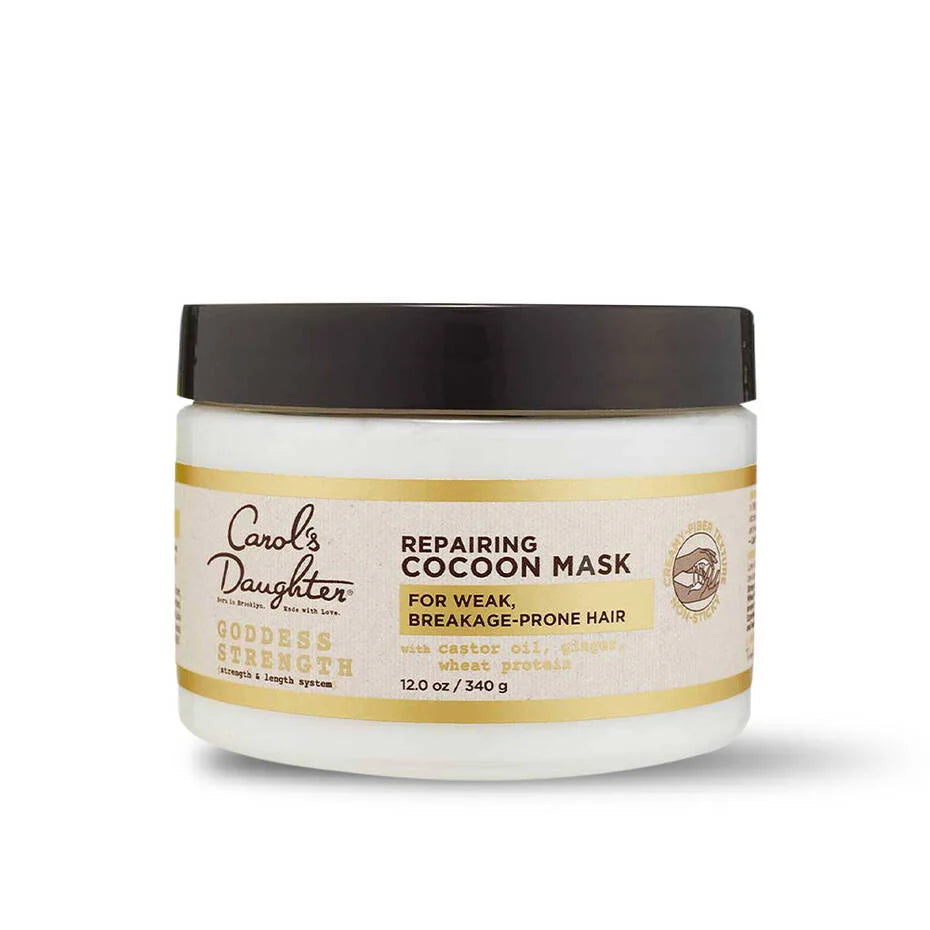
A weekly deep conditioning treatment is the single biggest defense against breakage. The Goddess Strength Cocoon Hydrating Hair Mask delivers an intense moisture treatment that helps restore, strengthen, and protect breakage-prone strands. The Goddess Strength line delivers up to 7x stronger hair and 86% breakage reduction with regular use.
For broader breakage prevention, see our hair breakage causes and treatments guide and our 7 hair strengthening tips for weak curly hair.
Reason #3: Over-Processing
Bleach, dye, relaxers, perms, keratin treatments, and frequent heat styling all break down the protein bonds inside your hair. Over-processed hair often stops gaining length because it's breaking off as fast as it grows.
Signs your hair is over-processed:
- Curls feel limp, stretched, or have lost their pattern
- Hair snaps easily during detangling
- Color won't hold or fades unevenly
- Severe dryness that doesn't respond to moisturizing
- Bald-feeling spots where breakage has compounded
The fix:
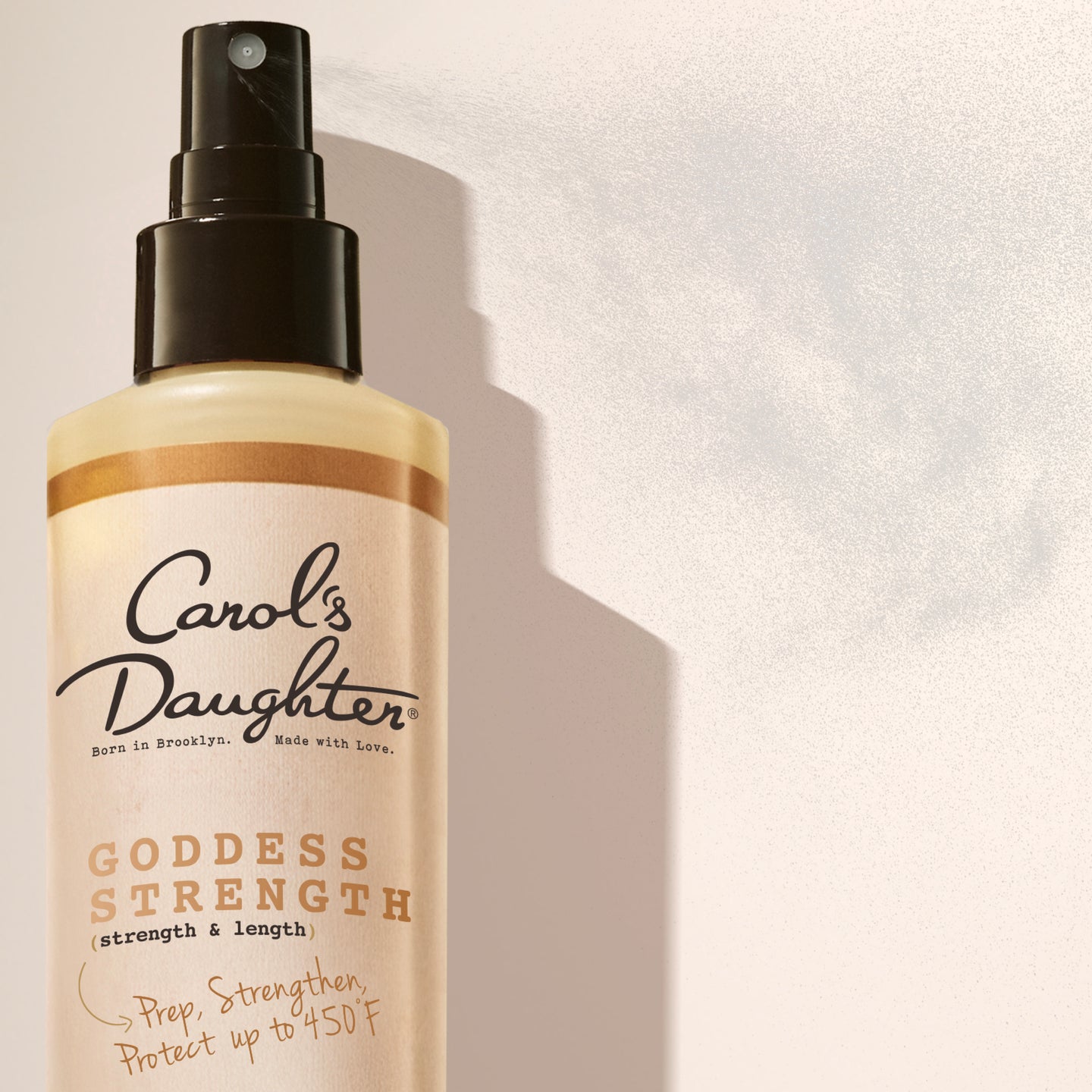
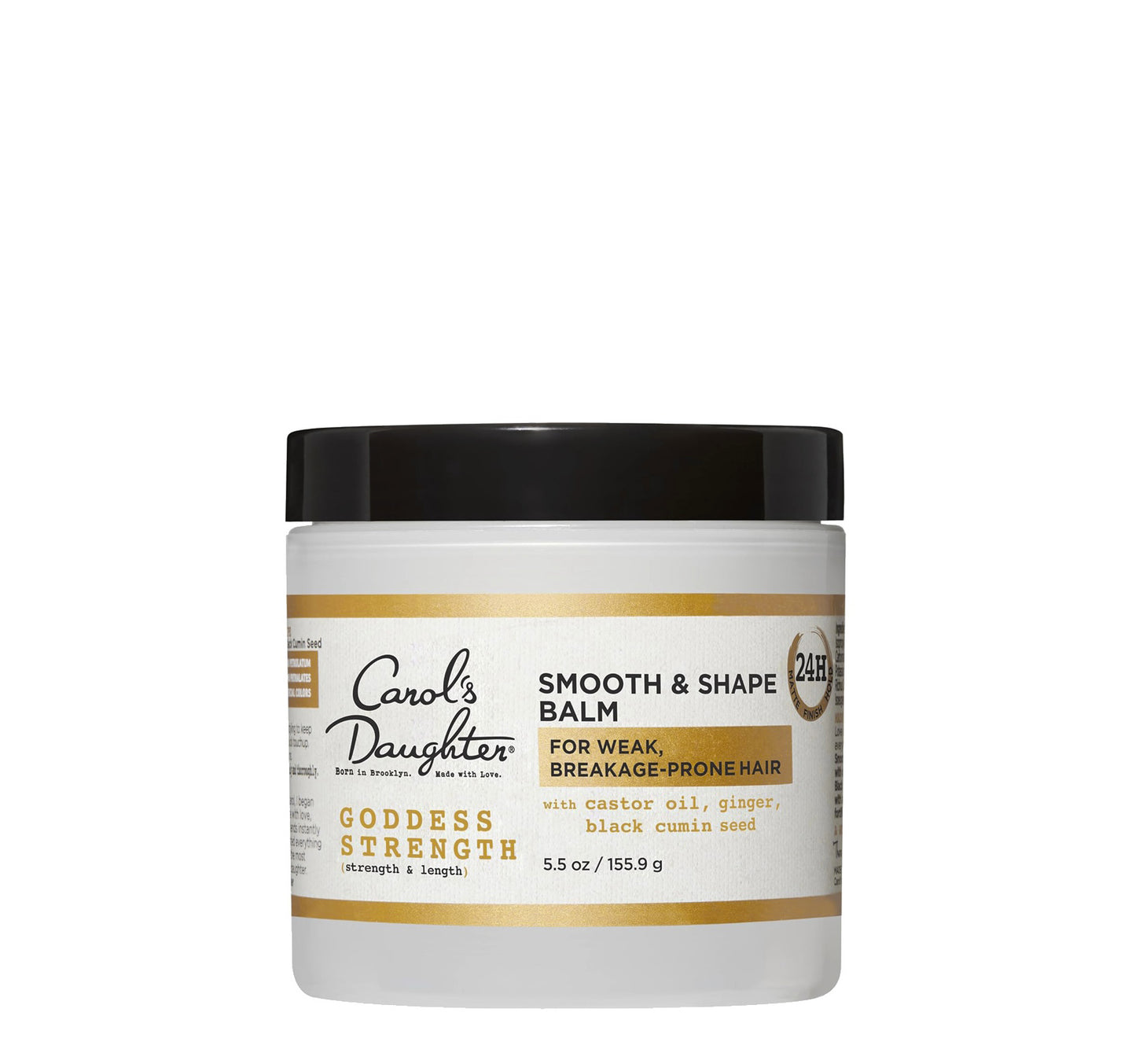
Stop adding new chemical or heat damage immediately. Switch into a recovery routine built around the Goddess Strength collection:
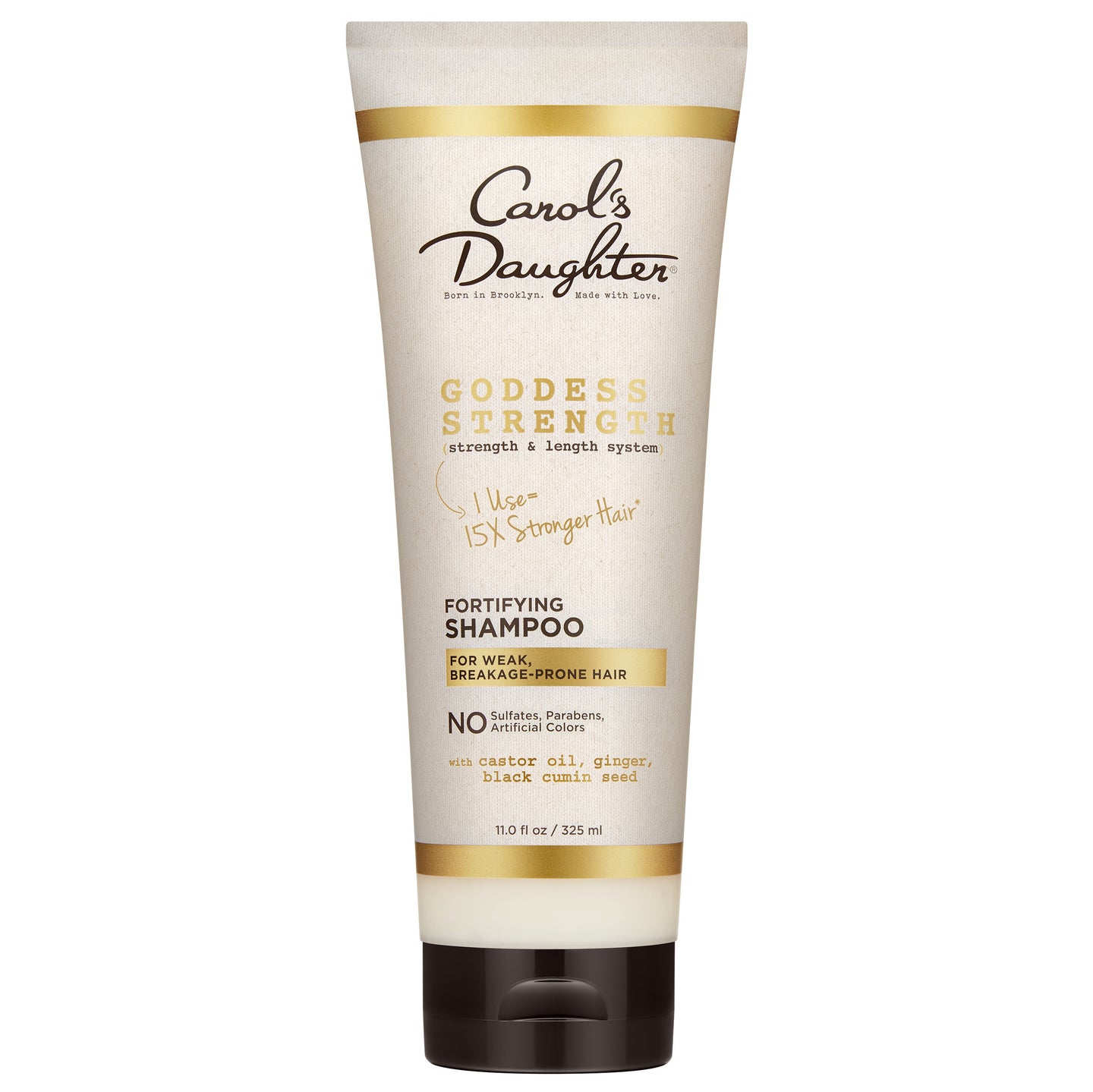
- Goddess Strength Fortifying Shampoo with Castor Oil
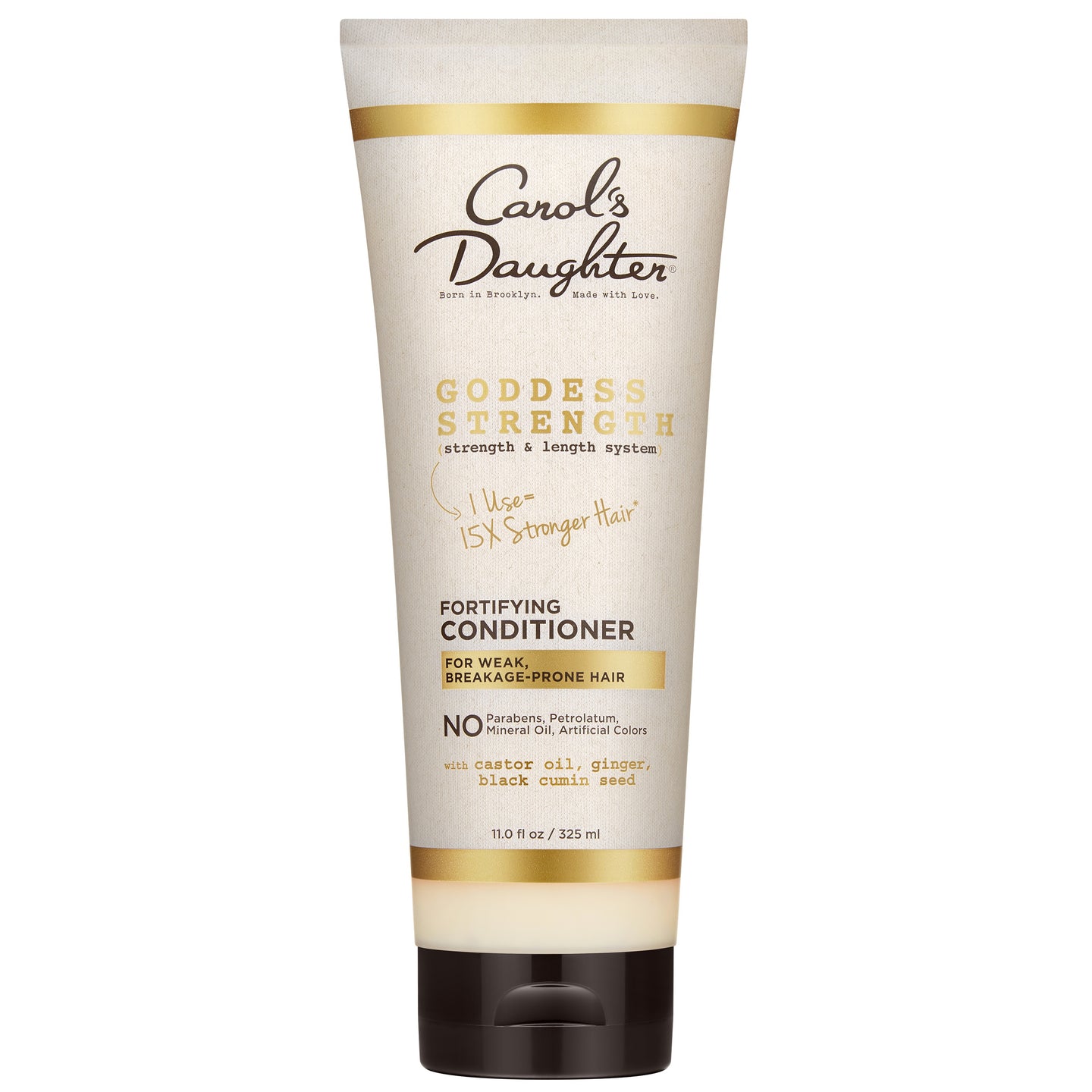
- Goddess Strength Fortifying Conditioner
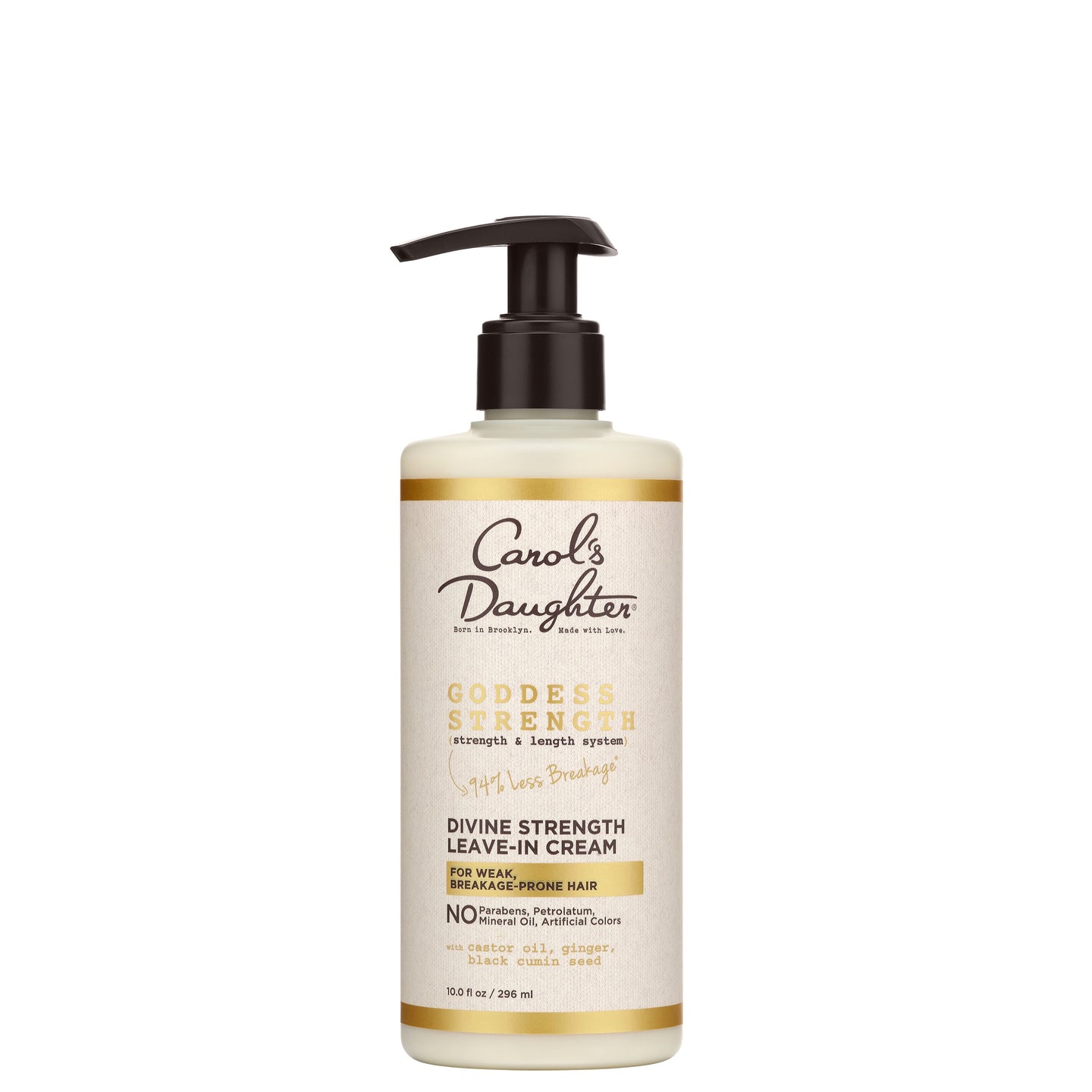
- Goddess Strength Divine Strength Leave-In Cream
- Goddess Strength 7-Oil Blend Hair & Scalp Oil
For specific recovery routines, see our bleach damage recovery guide, heat damage recovery guide, or complete damaged hair recovery guide.
Recovery typically takes 2–3 months of consistent care.
Reason #4: Genetics
This one's harder to hear, but it's real.
Your hair's growth cycle has three phases — anagen (growth), catagen (transition), and telogen (rest). The length of your anagen phase is largely determined by genetics, and it sets the maximum length your hair can typically reach.
What genetics determine:
- The length of your anagen (active growth) phase
- Your maximum terminal length (how long your hair can grow before naturally shedding)
- Your overall hair density (how many follicles you have)
- Your strand thickness (fine vs. coarse)
If your family tends to have hair that doesn't pass shoulder length, you may be working against a genetically shorter anagen phase. That doesn't mean you can't grow long hair — it just means you have to be especially intentional about retention.
The fix:
You can't change your genetics, but you can maximize what you have:
- Protect every inch you grow with consistent moisture and gentle handling
- Trim only what you need to (less is more if you're trying to retain length)
- Use protective styles strategically to minimize breakage
- Be patient — visible length gains often take 6+ months even with a perfect routine
Reason #5: An Underlying Health Issue
If you've addressed your diet, your routine, and you're being patient — and your hair still isn't growing — there may be a medical cause worth exploring.
Health conditions that can affect hair growth:
- Thyroid issues (both hyperthyroidism and hypothyroidism)
- Iron deficiency or anemia
- Hormonal imbalances (PCOS, postpartum hormonal shifts, menopause)
- Vitamin D deficiency
- Stress (chronic cortisol elevation can disrupt the hair cycle)
- Autoimmune conditions like alopecia
- Side effects from medications
The fix:
See your doctor or a dermatologist for bloodwork and an evaluation. Many of these conditions are treatable, and addressing the underlying issue often restores hair growth on its own.
Don't self-diagnose or try to outsource a medical issue to a hair routine — it won't work, and you'll lose time you could spend actually addressing the problem.
What's Actually Working: A Length Retention Routine
If breakage is the most common cause (and it usually is), the best thing you can do is build a routine focused on retention, not growth.
The retention basics:
- Sulfate-free shampoo — cleans without stripping
- Weekly deep conditioning — restores moisture from inside the strand
- Daily leave-in — keeps moisture replenished between washes
- Sealing oil — locks moisture in to prevent dryness-related breakage
- Satin or silk pillowcase — eliminates overnight friction
- Trims every 8–12 weeks — removes splits before they travel up the strand
- Protective styles — give your hair time to rest from daily manipulation
For the full breakdown, see our complete guide to moisturizing natural hair.
When to See a Doctor About Hair Growth
Most growth concerns can be addressed with routine adjustments. But certain signs warrant a medical evaluation:
- Sudden or significant hair loss (not just slow growth)
- Visible bald patches or thinning in specific areas
- Hair coming out from the root in clumps
- Significant changes alongside other symptoms (fatigue, weight changes, skin issues)
- A family history of hair loss conditions
A dermatologist can run bloodwork, examine your scalp, and identify whether the cause is medical or routine-based.
Frequently Asked Questions About Hair Growth
How fast does hair actually grow?
About half an inch per month, or six inches per year, for most people. Some grow slightly faster, some slightly slower — but variations of more than 25% from this average are unusual. If your hair seems significantly slower, it's almost always a length retention issue or a health issue, not a growth speed issue.
Can products make my hair grow faster?
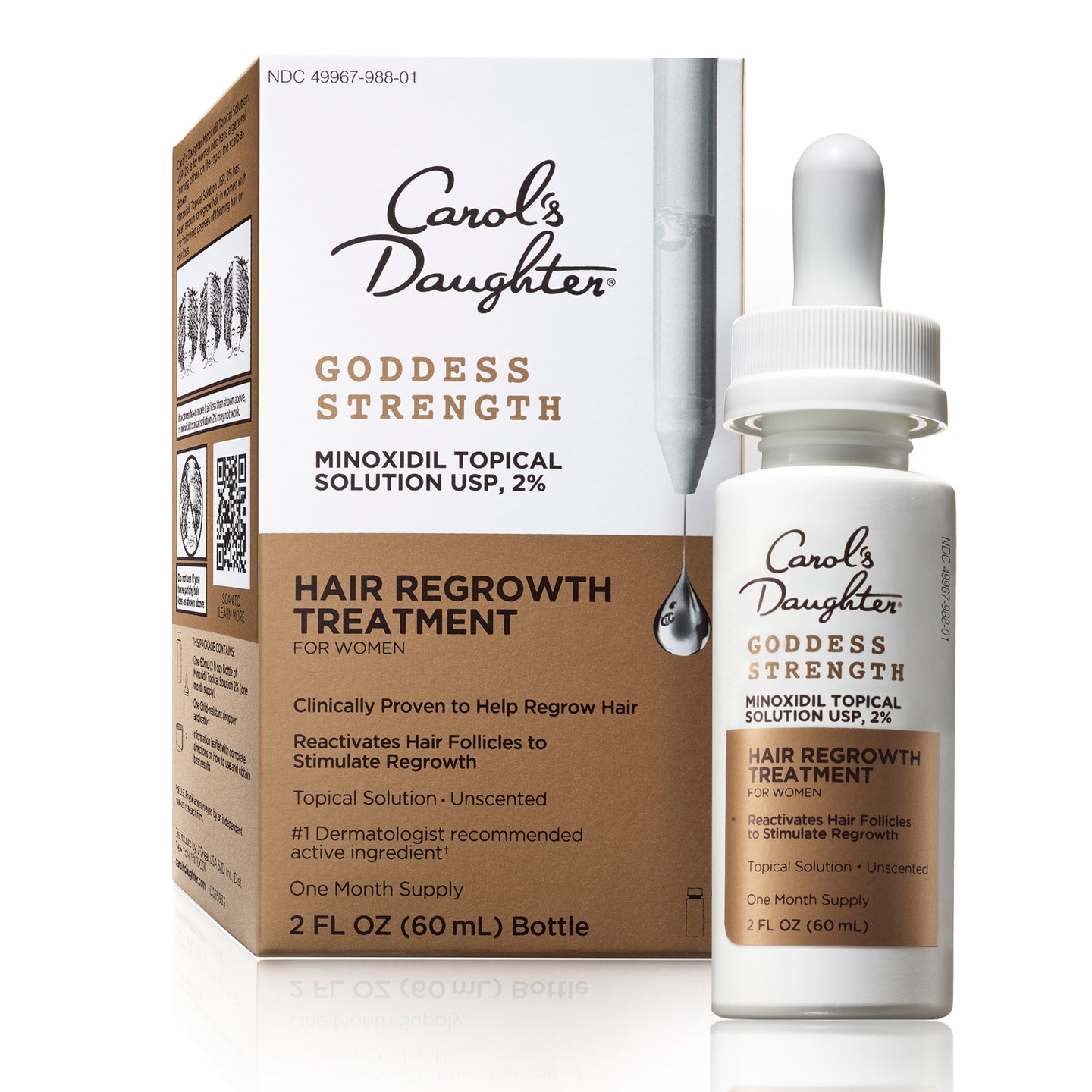
Most "hair growth" products don't actually accelerate growth — what they do is reduce breakage, support scalp health, and improve length retention, which makes hair appear to grow faster. The exception is FDA-approved minoxidil, which is clinically shown to support growth in cases of certain types of hair loss. Carol's Daughter offers minoxidil through the Goddess Strength Hair Regrowth Treatment for women experiencing hair loss.
Does cutting my hair make it grow faster?
No — but trimming damaged ends prevents splits from traveling up the strand and forcing more dramatic chops later. Regular trims protect your length retention even though they don't change your growth rate.
Why does my hair grow longer in some spots but not others?
Uneven growth usually points to one of three things: tension in those areas (from tight ponytails, headbands, or styles), repeated friction (where a backpack or shirt collar rubs), or scalp issues affecting specific follicle clusters. Look at your daily habits for patterns near the slow-growth spots.
Can stress really stop my hair from growing?
Yes. Chronic stress raises cortisol, which can push more hair into the resting (telogen) phase of the growth cycle — leading to noticeable thinning and shedding 2–3 months after a major stressor. This is called telogen effluvium, and it's one of the most common causes of unexplained hair loss in women. Stress management is part of hair health.
How long should I try a routine before deciding it's not working?
At least 8–12 weeks. Hair changes happen slowly, and you'll need that long to see whether breakage has decreased and length is starting to retain. If after 12 weeks of consistent routine you're still seeing significant issues, it's time to either adjust the routine or talk to a dermatologist.
Ready to start retaining length?
For strength and breakage reduction → Shop the Goddess Strength collection
For damaged hair recovery → Shop the Born to Repair collection
Browse by hair concern → Shop hair breakage
Not sure where to start? → Take the Curl Quiz