

Hair Breakage: Causes, Signs, and How to Stop It


Hair Breakage: Causes, Signs, and How to Stop It
By Carol's Daughter — Updated May 2026
Quick Answer: Hair breakage happens when the strand itself snaps or shreds — not from the root, but along the shaft. The most common causes: heat styling, chemical processing, tight hairstyles, sulfate shampoos, rough handling, and lack of moisture. You can't repair already-broken strands, but you can stop new breakage by switching to sulfate-free care, deep conditioning weekly, sealing with oil, and avoiding the damaging habits below. Hair grows back from breakage with consistent care.
A few stray strands here and there are normal — everyone sheds some hair every day. But when you start seeing little broken pieces of hair on your bathroom counter, in your sink, or wrapped around your comb, that's a different problem.
Hair breakage is one of the most common reasons natural hair feels stuck at the same length. You're growing new hair from the roots — but you're losing it just as fast to broken strands.
The good news: breakage is preventable. Once you understand what's causing it, the fixes are usually straightforward.
What Is Hair Breakage?
Hair breakage happens when individual strands snap or shred along the length of the shaft, rather than falling out from the root.
Most of the time, you won't see full hairs on the floor — you'll see small broken pieces. That's the telltale sign that what you're losing isn't natural shedding, but breakage from damage.
Split ends are one of the most visible signs of breakage in progress. When the protective outer layer of the hair (the cuticle) gets damaged enough, the strand starts to fray and split — and that splitting travels up the shaft until the strand eventually breaks off.
For more on managing splits specifically, see our guide to managing split ends on curly hair.
Hair Breakage vs. Hair Shedding (They're Different)
People often use "breakage" and "shedding" interchangeably, but they're two different things — and they're caused by different things.
| Hair shedding | Hair breakage |
|---|---|
| Hair falls from the root | Strand snaps along the shaft |
| You see full-length strands | You see broken pieces and fragments |
| Has a white bulb at the root | No bulb — clean break |
| Normal range: 50–100 hairs/day | Any amount means damage |
| Often hormonal or seasonal | Caused by physical or chemical damage |
Some shedding is normal — your hair has a natural growth cycle, and losing 50–100 strands per day is healthy. If you're seeing more than that OR if the hairs you're losing don't have a white bulb at the end, you're likely dealing with breakage.
If excessive shedding doesn't slow down with routine changes, it's worth talking to a dermatologist to rule out underlying causes.
How to Tell New Growth from Breakage
Confusion between new growth and breakage is common — both can look like short, broken-off pieces.
The difference:
- New growth appears evenly across your scalp and at the roots. Strands have natural taper at the bottom (where they end) and are fine at the top (where they start). It's a sign of healthy turnover.
- Breakage shows up at varied lengths along your hair shaft, often in the same spots repeatedly (where ponytail elastics sit, where hair frames your face, or at the ends). The broken hairs are often blunt at the bottom — sharply cut off rather than tapered.
If you're seeing baby hairs growing in evenly along your hairline and crown, that's good news. If you're seeing patches of short hair where damage tends to concentrate, that's breakage.
What Causes Hair Breakage?
Most breakage traces back to one or more of these six causes.
Excessive Heat Styling
Frequent flat ironing, blow-drying, and curling iron use weakens hair by breaking the protein bonds inside the strand. Heat above 400°F damages most curl patterns; even temperatures below that cause cumulative damage with daily use.
For full details on reversing this, see our heat damage recovery guide.
Bleaching and Chemical Processing
Bleach is one of the most damaging things you can put on hair. It strips the cuticle and weakens the protein structure of every strand it touches, leaving hair brittle and prone to snapping.
Other chemical processing (relaxers, perms, repeated dye sessions) compounds the same issue.
For bleach-specific recovery, see our bleach damage recovery guide.
Overwashing With Sulfate Shampoos
Washing too often — especially with sulfate-based shampoos — strips your hair of natural oils. Without those oils, your strands become brittle and break easily during everyday handling.
Most curly hair does best with 1–2 washes per week, depending on scalp condition.
Tight Hairstyles
Braids, cornrows, ponytails, and weaves that pull tightly on your hair create constant tension at the follicle. Over time, that tension causes inflammation at the root and can lead to breakage along the shaft.
The fix isn't to avoid these styles entirely — it's to ensure they're not so tight they hurt, and to give your hair regular breaks between protective installs.
Stress
Chronic stress raises cortisol levels, which can disrupt your hair's natural growth cycle and contribute to shedding and breakage. This isn't always something a hair routine can fix — sometimes the right move is addressing the stress itself.
Diet and Nutrition
Hair is made of protein. Without adequate protein, iron, zinc, biotin, and other key nutrients, your hair literally can't build itself strong. A deficient diet shows up in your hair within months.
Signs of Hair Breakage
If you're not sure whether your hair is breaking, look for these six signs.
- Visible split ends that look like Y-shapes, branches, or feathered tips
- Short broken pieces in your sink, on your shoulders, or in your comb
- Thinning at the ends while your roots feel thicker
- Frizz that won't smooth with product (a sign of raised, damaged cuticles)
- Rough, brittle texture that doesn't soften even after deep conditioning
- Hair that snaps when stretched rather than bouncing back
If you're seeing more than two of these, your hair is asking for a recovery routine.
Find Your Personalized Routine
Knowing your curl type and current damage level helps you build a recovery routine that actually works.
Take the Curl Quiz → A 5-step quiz that identifies your hair type, main concerns, and the products built for your texture.
Can Hair Breakage Be Fixed?
The honest answer: already-broken hair can't be repaired. Once a strand breaks, that strand is gone.
What you can do is:
- Stop new breakage from happening
- Strengthen the rest of your hair so it doesn't break next
- Trim the most damaged sections so splits don't keep traveling up the shaft
- Build a routine that supports healthy new growth from the roots
In other words, you can't undo broken hair, but you can prevent the next break — and most people see significant improvement within 2–3 months of consistent care.
How to Stop Hair Breakage: 8 Habit Swaps
The fastest way to reduce breakage is to identify which causes apply to you and change those specific habits.
1. Keep Your Hair Moisturized
Dry hair breaks. It's that simple.
A consistent moisture routine is the single biggest defense against breakage — especially for curly textures, which run drier by default.
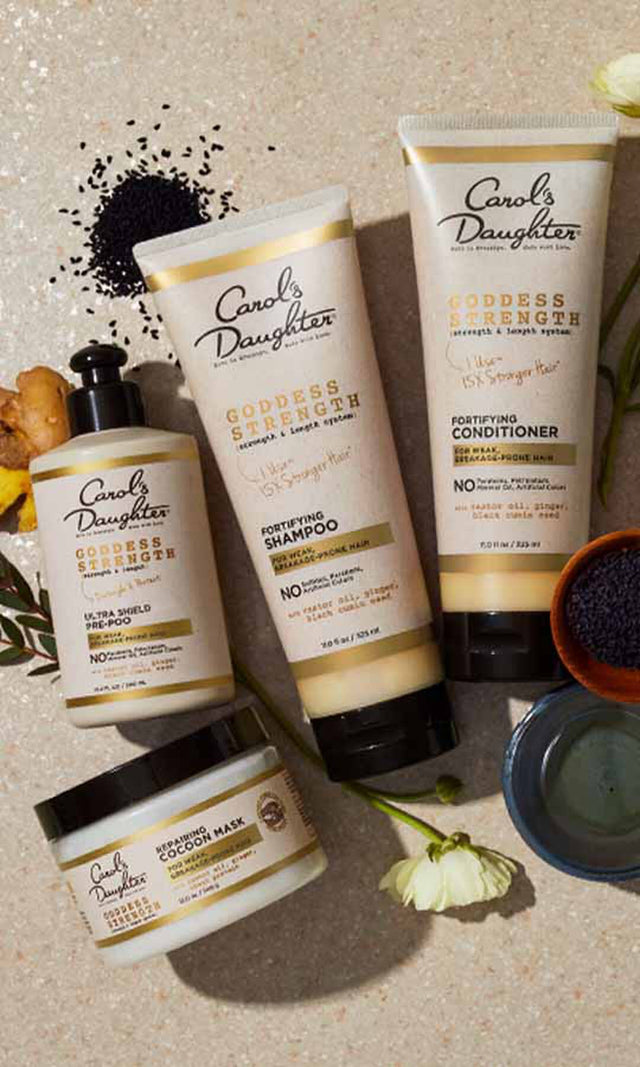
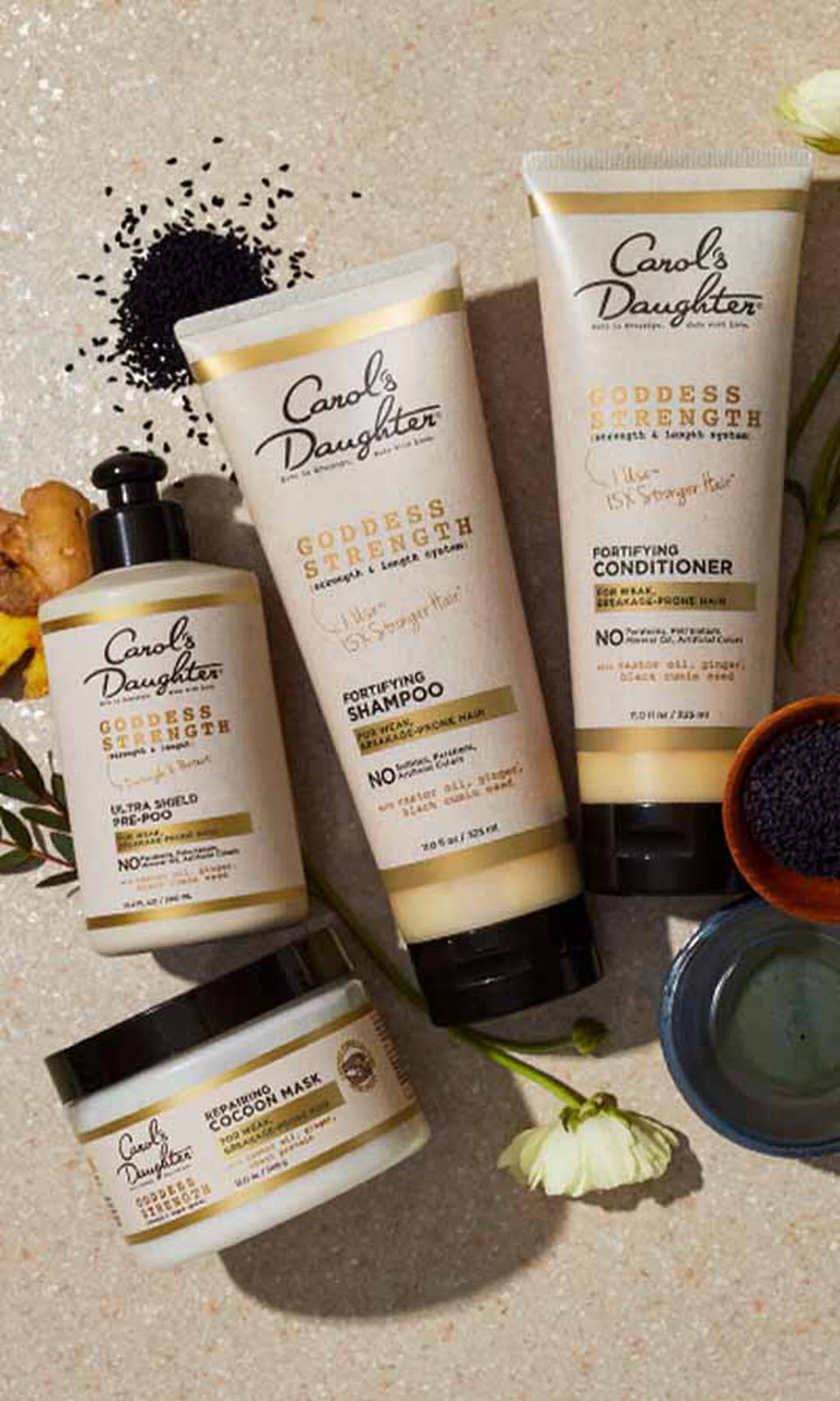
The Goddess Strength collection is built around moisture and strength. Castor oil, ginger, and black cumin seed oil work together to reinforce weak strands while delivering deep hydration. The line delivers up to 7x stronger hair and 86% breakage reduction with regular use.
For more on building a daily moisture routine, see our complete guide to moisturizing natural hair.
2. Switch to Sulfate-Free Shampoo
Sulfates strip the moisture you spent your whole routine building. A sulfate-free shampoo cleanses gently without stripping.
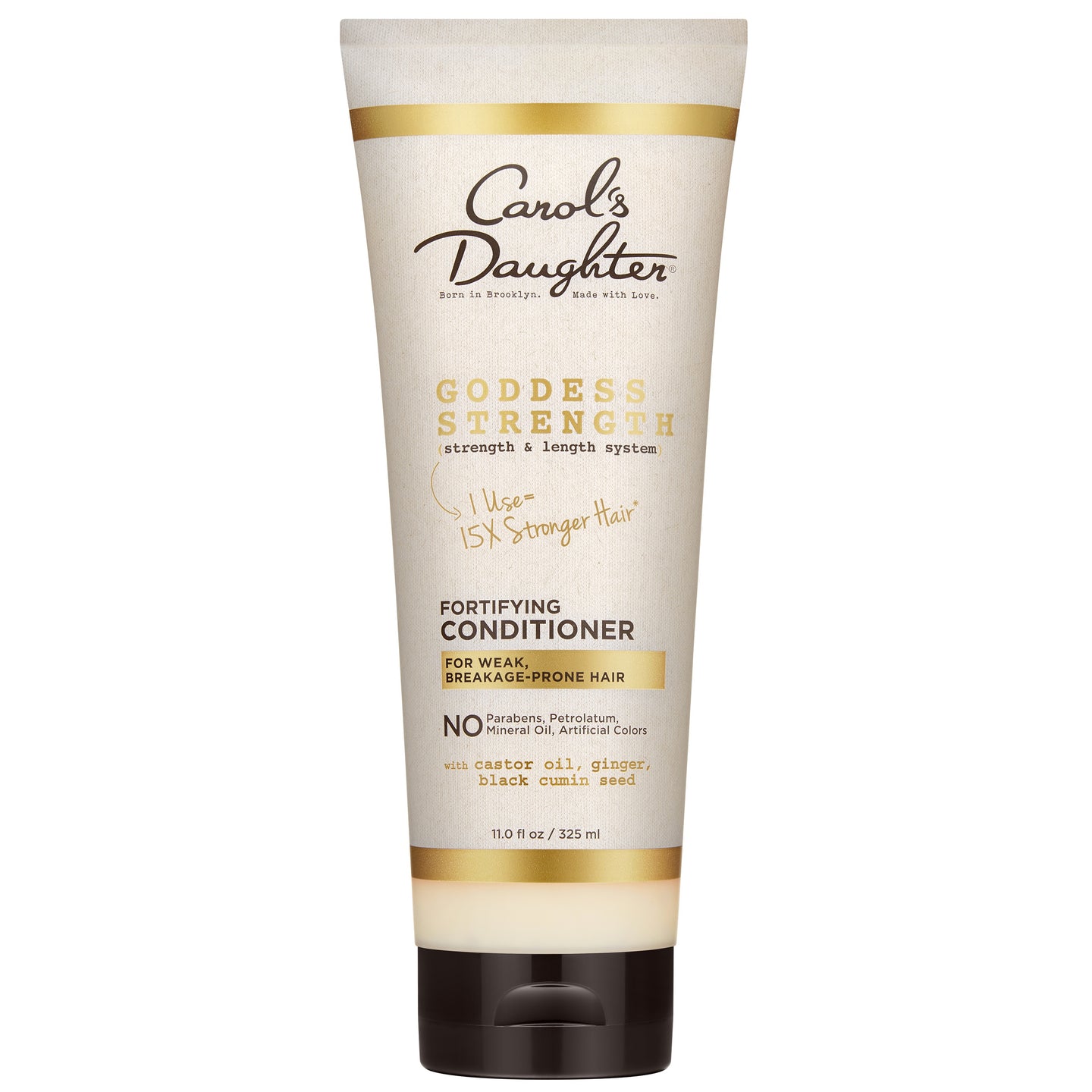
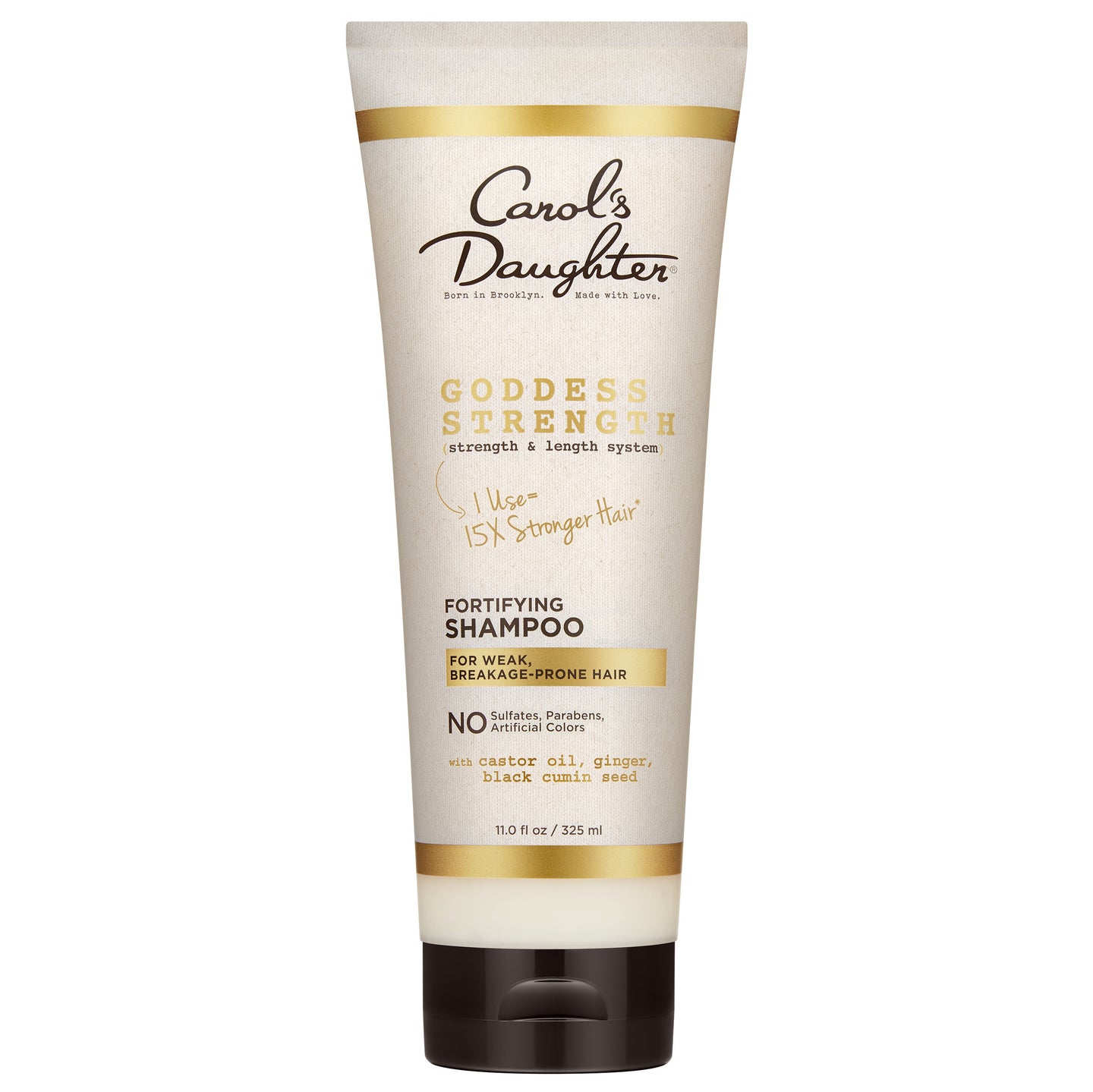
The Goddess Strength Fortifying Shampoo with Castor Oil cleanses gently while reinforcing weak strands. Pair it with the Goddess Strength Fortifying Conditioner to layer in moisture and slip for safer detangling.
Two shampooing rules that protect against breakage:
- Apply shampoo to your scalp only, let the suds rinse through your length
- Massage with your fingertips, never your nails
3. Trim Split Ends Early
Splits don't heal. They keep traveling up the strand until you trim them off.
Get a trim every 6 to 8 weeks if you're actively trying to prevent breakage, or every 8 to 12 weeks for general maintenance. A small trim is always better than waiting until the damage is so widespread you need a major chop.
Between trims, the Born to Repair Reviving Hair Oil with Shea Butter visibly seals up to 84% of split ends — a temporary smoothing that buys you time until your next appointment.
4. Go Easy on the Heat
Heat styling is fine in moderation. Daily heat styling is a breakage accelerator.
When you do use heat:
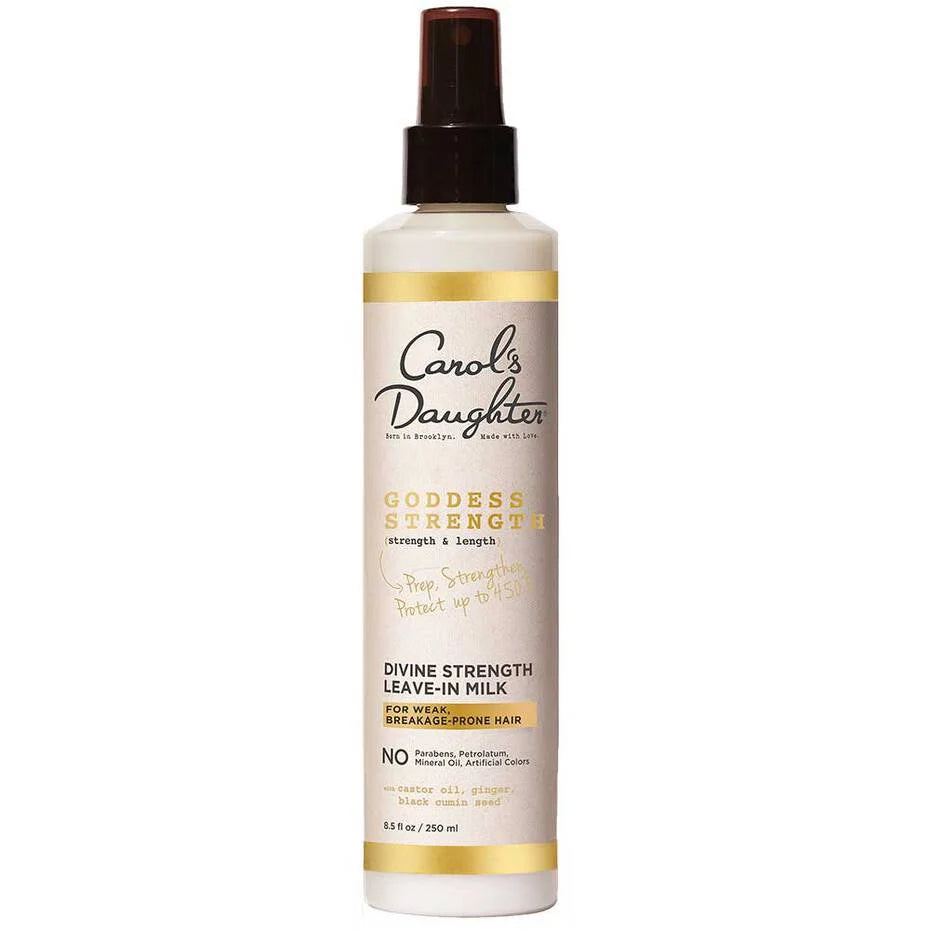
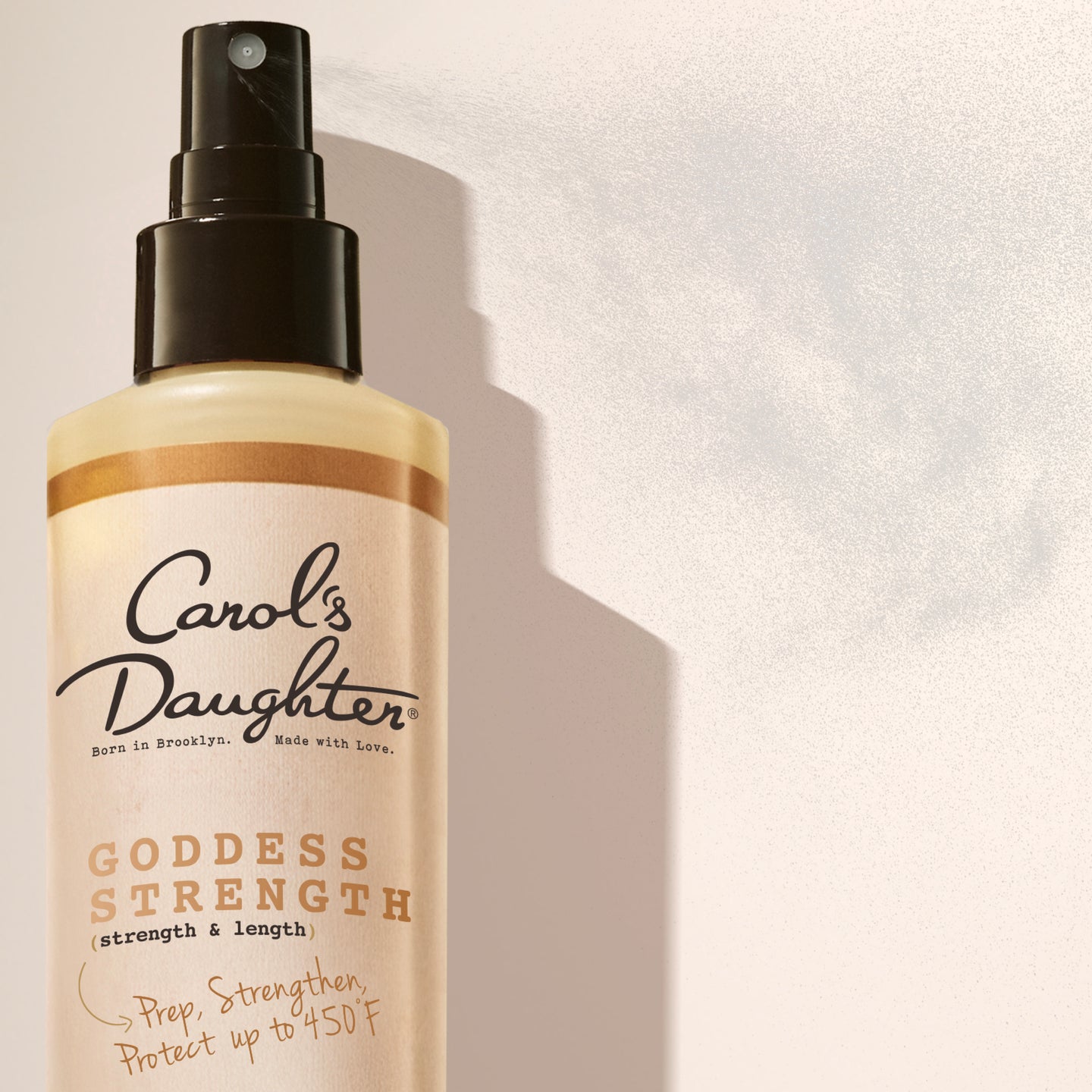
- Always apply a heat protectant first — the Goddess Strength Divine Strength Leave-In Milk protects up to 450°F
- Use the lowest temperature that gets results
- Limit direct heat to once a month or less
- Use a diffuser when blow-drying instead of a concentrator nozzle
Air drying or low-heat diffusing is always gentler than direct heat tools.
5. Use a Pre-Shampoo Treatment
Pre-shampoo treatments (sometimes called "pre-poos") create a protective layer over your hair before you wash, so the shampoo has less stripping impact on your already-fragile strands.
A simple pre-shampoo: section your hair, saturate with Goddess Strength 7-Oil Blend Hair & Scalp Oil or your favorite conditioner, leave for 10–20 minutes, then wash as usual.
6. Deep Treat Weekly
A weekly deep conditioning treatment restores moisture and strengthens hair from the inside.
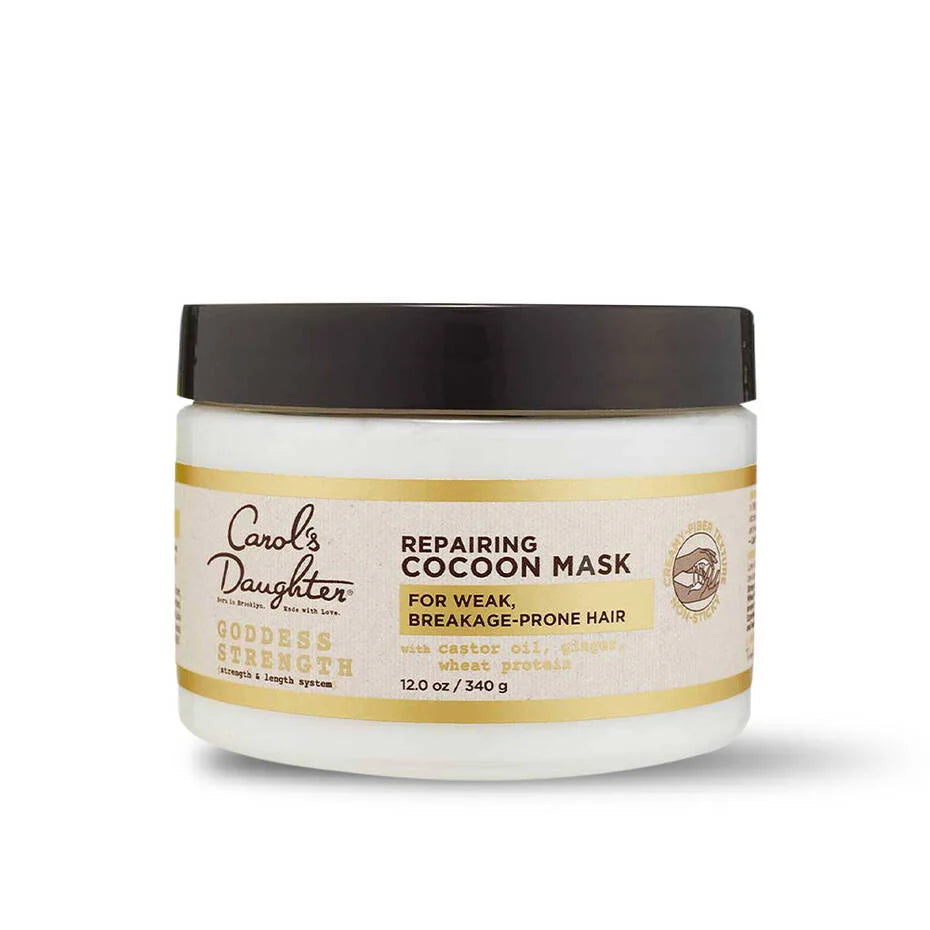
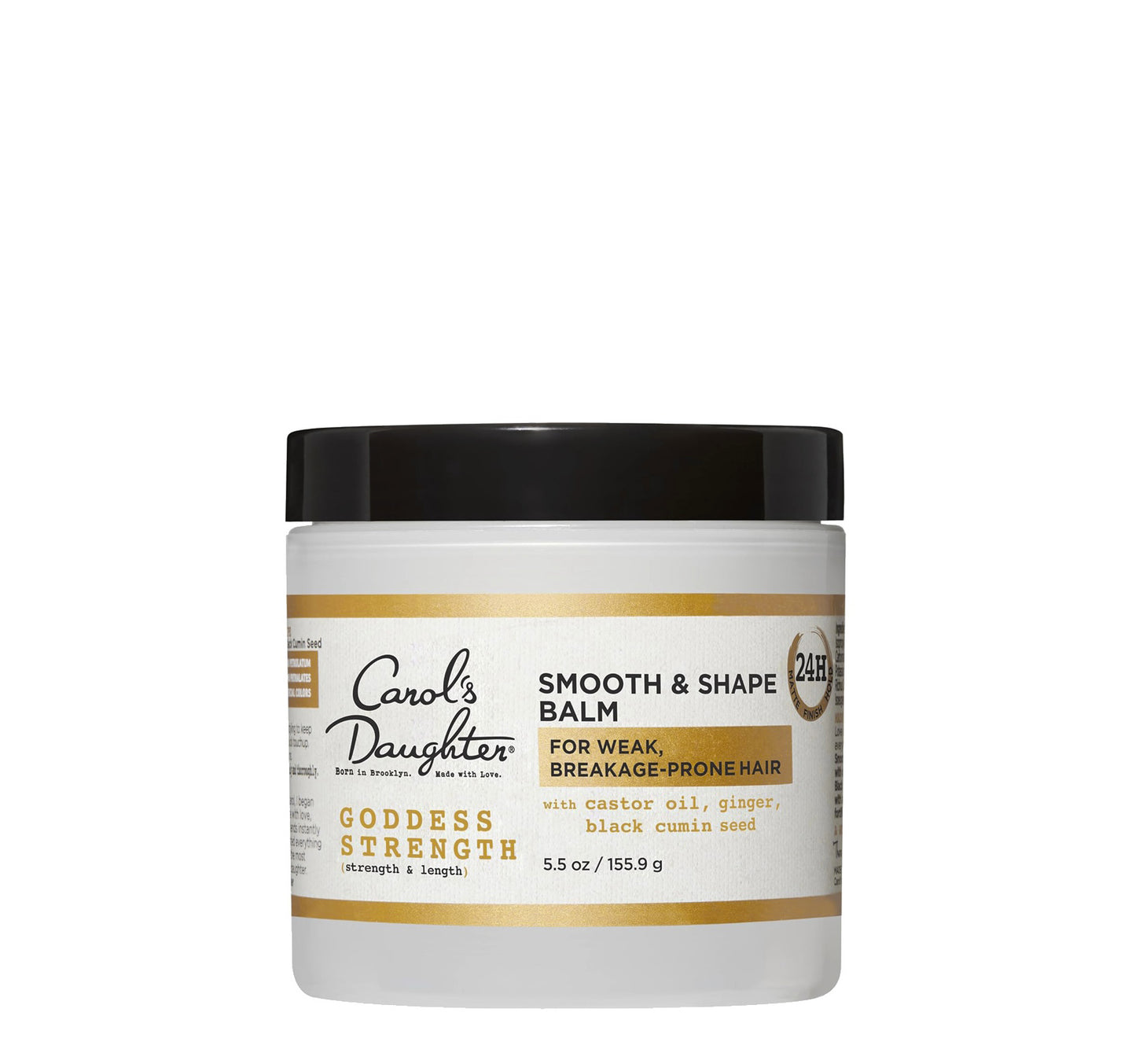
The Goddess Strength Cocoon Hydrating Hair Mask delivers an intense moisture treatment that helps restore, strengthen, and protect breakage-prone strands.
The Goddess Strength True Stretch Defining Cream is another strong option — it elongates curls for up to 48 hours while reinforcing strands with castor oil.
7. Skip the Damaging Styles
Some styles cause more breakage than they prevent.
Styles to avoid (or wear loosely):
- Tight braids, cornrows, or ponytails that pull at the scalp
- Weaves or extensions installed too tightly
- Hairstyles worn longer than 2–3 months without a break
- Multiple chemical processes (color + relaxer + keratin) in one session
Protective styles are good — too tight protective styles aren't. If your edges hurt or your scalp feels sore, the style is too tight.
8. Layer in a Strengthening Leave-In
Daily reinforcement between washes helps prevent the daily wear-and-tear breakage that accumulates.
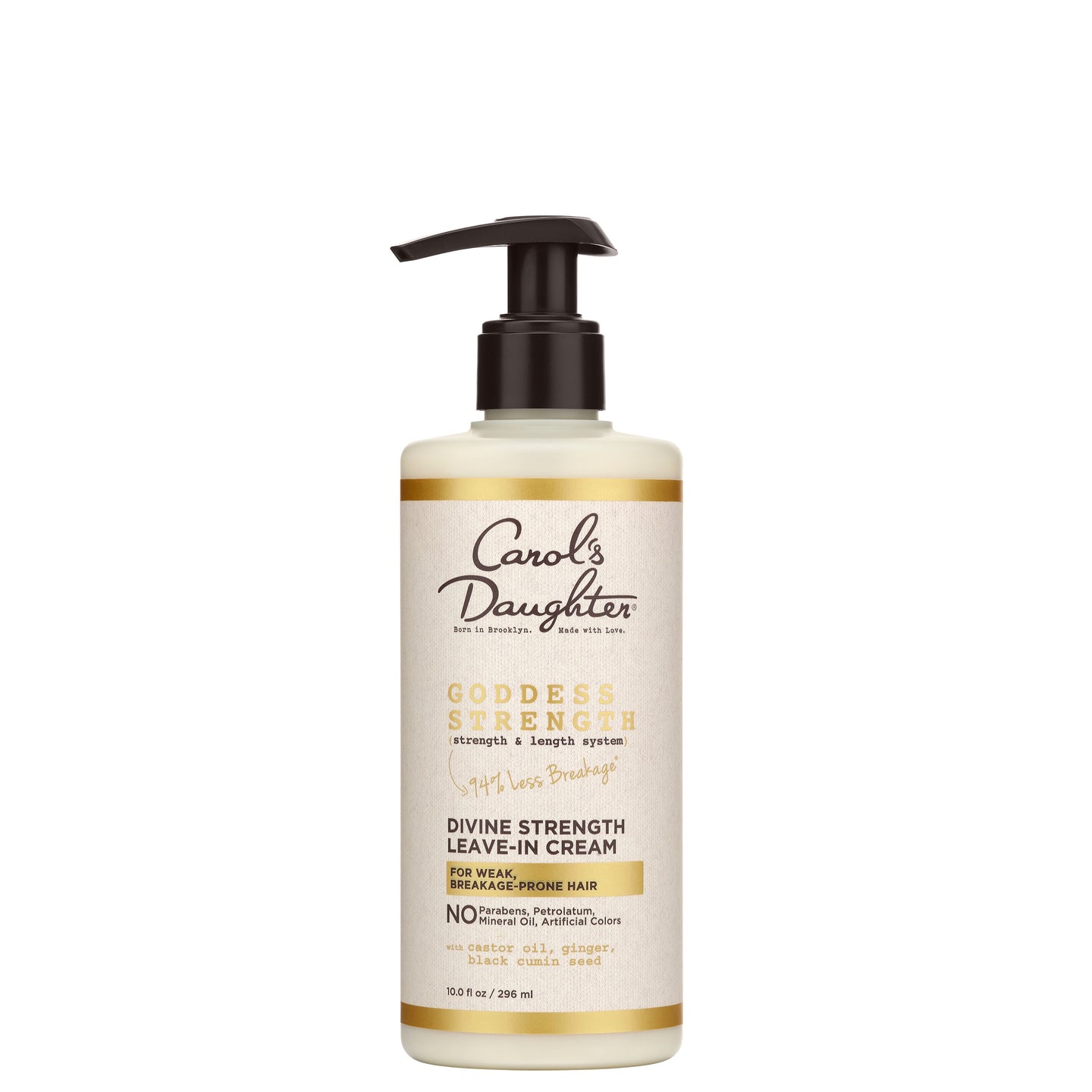
The Goddess Strength Divine Strength Leave-In Cream with Castor Oil softens, detangles, and smooths hair while reinforcing weak strands. Apply daily or every other day to damp hair from mid-shaft to ends.
The Best Products for Hair Breakage
Different product types solve different parts of the breakage problem. A complete routine includes most of these.
Hair Mask
Deep conditioning masks coat strands with moisture-rich, protein-supportive ingredients to nourish and strengthen brittle hair. Use weekly during active recovery, monthly for maintenance.
Strong picks: Goddess Strength Cocoon Hydrating Hair Mask, Born to Repair 60-Second Moisture Treatment
Leave-In Conditioner
A leave-in delivers ongoing moisture between washes. Lightweight enough for daily use, but powerful enough to protect your hair from everyday breakage.
Strong pick: Goddess Strength Divine Strength Leave-In Cream
Hair Oil
Sealing oils lock moisture into your strand and add a protective layer that reduces friction. Castor oil specifically helps with breakage repair.
Strong picks: Goddess Strength 7-Oil Blend, Born to Repair Reviving Hair Oil
Pre-Shampoo Treatment
A pre-poo creates a protective layer before washing so your shampoo doesn't strip everything in its path.
DIY option: Apply your favorite hair oil or conditioner 10–20 minutes before shampooing.
Frequently Asked Questions About Hair Breakage
Can hair grow back from breakage?
Yes — your follicles continue to produce new hair regardless of past breakage. With consistent care that prevents new breakage, your hair will grow longer over time. Most people see meaningful improvement within 2–3 months of changing their routine.
How do I know if my hair is breaking or shedding?
Check the strand. Shedding produces full-length hairs with a small white bulb at the root. Breakage produces shorter pieces without a bulb — clean breaks along the shaft. Shedding is normal in moderate amounts; breakage means your hair is being damaged somewhere in your routine.
What's the fastest way to stop hair breakage?
Trim damaged ends, switch to sulfate-free shampoo, deep condition weekly, and stop heat styling for at least a month. Those four changes solve the majority of breakage cases. Once breakage slows, you can rebuild moisture and strength with consistent products.
Does hair breakage mean I'm losing hair permanently?
Usually no. Breakage along the shaft means broken hair, but your follicle is still intact and growing new hair. Permanent hair loss involves damage to the follicle itself, often from prolonged tension (traction alopecia) or medical conditions. If you're seeing patches where new hair isn't growing in, see a dermatologist.
What's the difference between hair breakage and damaged hair?
Breakage is one symptom of damaged hair. Damaged hair encompasses a broader range of issues — dryness, frizz, split ends, lost curl pattern — and breakage is what happens when that damage progresses to the point where strands snap. For broader damage repair guidance, see our complete damaged hair recovery guide.
Should I see a doctor about hair breakage?
If you've made the routine changes above and you're still seeing significant hair loss after 2–3 months, talk to a dermatologist. Underlying causes (thyroid issues, hormonal changes, deficiencies, autoimmune conditions) can show up as breakage and need medical attention. Routine fixes won't solve a medical problem.
Ready to stop breakage and rebuild your hair?
For strength and breakage reduction → Shop the Goddess Strength collection
For damaged hair recovery → Shop the Born to Repair collection
Browse by hair concern → Shop hair breakage
Not sure where to start? → Take the Curl Quiz