Hair Porosity: A Complete Guide to Types and Testing


Hair Porosity: A Complete Guide to Types and Testing
By Carol's Daughter — Updated May 2026
Quick Answer: Hair porosity is your hair's ability to absorb and retain moisture — determined by how open or closed your hair cuticle is. There are three types: low porosity (tight cuticle, resists moisture), medium porosity (balanced — the easiest to manage), and high porosity (open cuticle, often damaged). To test yours: wash hair, drop a clean strand into water, and watch where it lands (top = low, middle = medium, sinks = high). Porosity matters because it determines which products work, how to apply them, and what styling techniques actually help your hair.
Why does your favorite curl cream work amazingly on one friend's hair but seem to do nothing on yours? Why does your hair soak up products instantly while someone else's seems to repel them?
The answer is usually porosity — and it's one of the most overlooked factors in hair care.
Once you understand your porosity and adjust your routine to it, your hair will respond completely differently. Here's everything you need to know.
What Is Hair Porosity?
In the simplest terms: porosity is your hair's ability to absorb and retain moisture and products.
There are three levels: low, medium, and high.
The Cuticle Determines Everything
Each strand of your hair has an outer shell of cuticles that look like shingles on a roof.
These cuticles are like doors that open and close — they absorb moisture when open and seal it in when closed. They naturally respond to environmental cues:
- Heat opens them (warm water, steam, blow-drying)
- Cold closes them (cool rinses, cold water)
- Smooth products seal them (oils, creams)
The pattern of how your cuticles lie — naturally closed, balanced, or open — determines your porosity.
The Three Types of Hair Porosity
Low Porosity Hair
Cuticle pattern: Tightly closed, overlapping cells.
Behavior: Resists moisture entry. Products bead up on top. Water rolls off rather than soaking in. Takes forever to get wet — and forever to dry.
Often associated with: Genetic predisposition. Many tightly textured hair types (3C, 4A, 4B, 4C) have low porosity.
Biggest concerns: Product buildup, persistent dryness despite moisturizing, protein sensitivity.
For the deep dive on low porosity, see our complete guide to low porosity hair.
Medium Porosity Hair
Cuticle pattern: Balanced — cuticles can open and close at the right times.
Behavior: Absorbs moisture readily and holds it well. Products work as expected.
Often associated with: Generally well-cared-for, undamaged hair across all curl types.
Biggest concerns: Maintaining the medium porosity status (which can shift toward high porosity from chemical processing or heat damage).
The "ideal" porosity — most products are formulated for medium porosity hair.
High Porosity Hair
Cuticle pattern: Open or damaged — gaps and lifted edges along the cuticle.
Behavior: Absorbs moisture quickly but loses it just as fast. Often the driest porosity because moisture flows in and right back out.
Often associated with: Chemical processing (color, relaxers, perms), heat damage, environmental damage, or simply genetic.
Biggest concerns: Frizz, dryness, breakage, difficulty holding styles.
Find Your Personalized Routine
Your specific porosity combined with your curl type determines what products work best.
Take the Curl Quiz → A 5-step quiz that identifies your hair type, main concerns, and the products built for your texture.
How Hair Type and Porosity Relate
Curly hair tends to be drier than straight hair because of how difficult it is for scalp oils to make their way through the coils from root to tip.
But this doesn't always mean all curly hair has the same porosity. Two people with 4C hair can have completely different porosities — one low, one high — and need completely different products as a result.
The same goes for every curl type. Wavy 2A hair can be low, medium, or high porosity. Curly 3B hair can be anywhere on the spectrum. The water test (below) is more reliable than assuming based on curl pattern.
For more on curl types specifically, see our complete guide to determining your natural hair curl pattern.
How to Test Your Hair Porosity: The Water-Glass Method
The quickest, easiest at-home porosity test.
Step 1: Wash Your Hair
Use a clarifying or sulfate-free shampoo to remove all product buildup, dirt, and residue. The Born to Repair Sulfate Free Nourishing Shampoo cleanses gently — a good baseline for porosity testing.
Step 2: Let Your Hair Dry Naturally
Air-dry completely with no products applied. You need to test clean, product-free strands.
Step 3: Fill a Glass With Room-Temperature Water
Not warm, not cold — room temperature gives the most accurate result.
Step 4: Drop a Few Clean Strands In
Pull strands from different parts of your head (crown, sides, nape) — your porosity may vary across your scalp.
Step 5: Watch for 2–4 Minutes
| Where the Strand Lands | Porosity |
|---|---|
| Floats on the surface | Low porosity |
| Floats in the middle | Medium porosity |
| Sinks to the bottom | High porosity |
If different strands land at different places, you have mixed porosity — common, especially for people with multi-textured hair.
How to Care for Low Porosity Hair
Low porosity hair needs help opening the cuticle so products can penetrate.
Key Practices
- Use warm water and steam to lift the cuticle for absorption
- Apply products to damp, sectioned hair (not soaking wet, not dry)
- Choose lightweight, water-based formulas over heavy butters
- Avoid coconut oil and castor oil (too heavy for low porosity)
- Avoid protein treatments (they sit on top and stiffen the hair)
- Use humectants like glycerin, honey, and hyaluronic acid
Best Products for Low Porosity Hair
- Born to Repair Sulfate Free Nourishing Shampoo — clean rinse without buildup
- Born to Repair 60-Second Moisture Treatment with Shea Butter — fast moisture for absorption-resistant hair
- Born to Repair Defining Leave-In Cream with Shea Butter — lightweight, well-absorbing
For more, see our complete guide to low porosity hair.
How to Care for Medium Porosity Hair
Medium porosity hair is the most forgiving — most products work well, and the routine is the simplest of the three.
Key Practices
- Maintain your hair's balanced state — don't over-process or over-style
- Limit chemical treatments and heat that can push hair into high porosity territory
- Use medium-weight products that aren't too light or too heavy
- Keep leave-ins, heat protectants, and moisturizers in your routine — they absorb well and stick around
Best Products for Medium Porosity Hair
- Born to Repair Defining Leave-In Cream with Shea Butter — medium-weight, balanced formula
- Born to Repair Nourishing Conditioner with Shea Butter — adds moisture without overwhelming
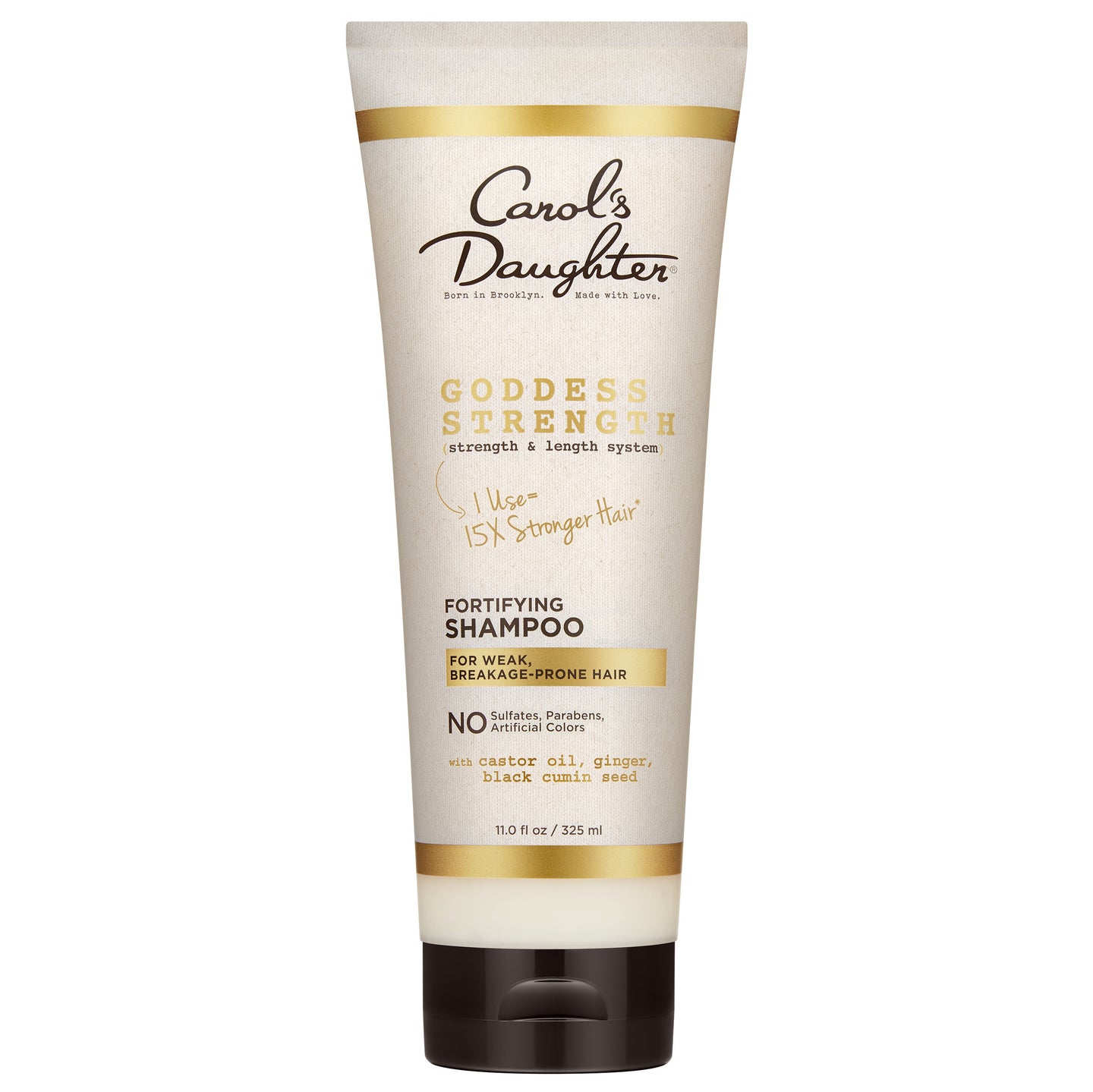
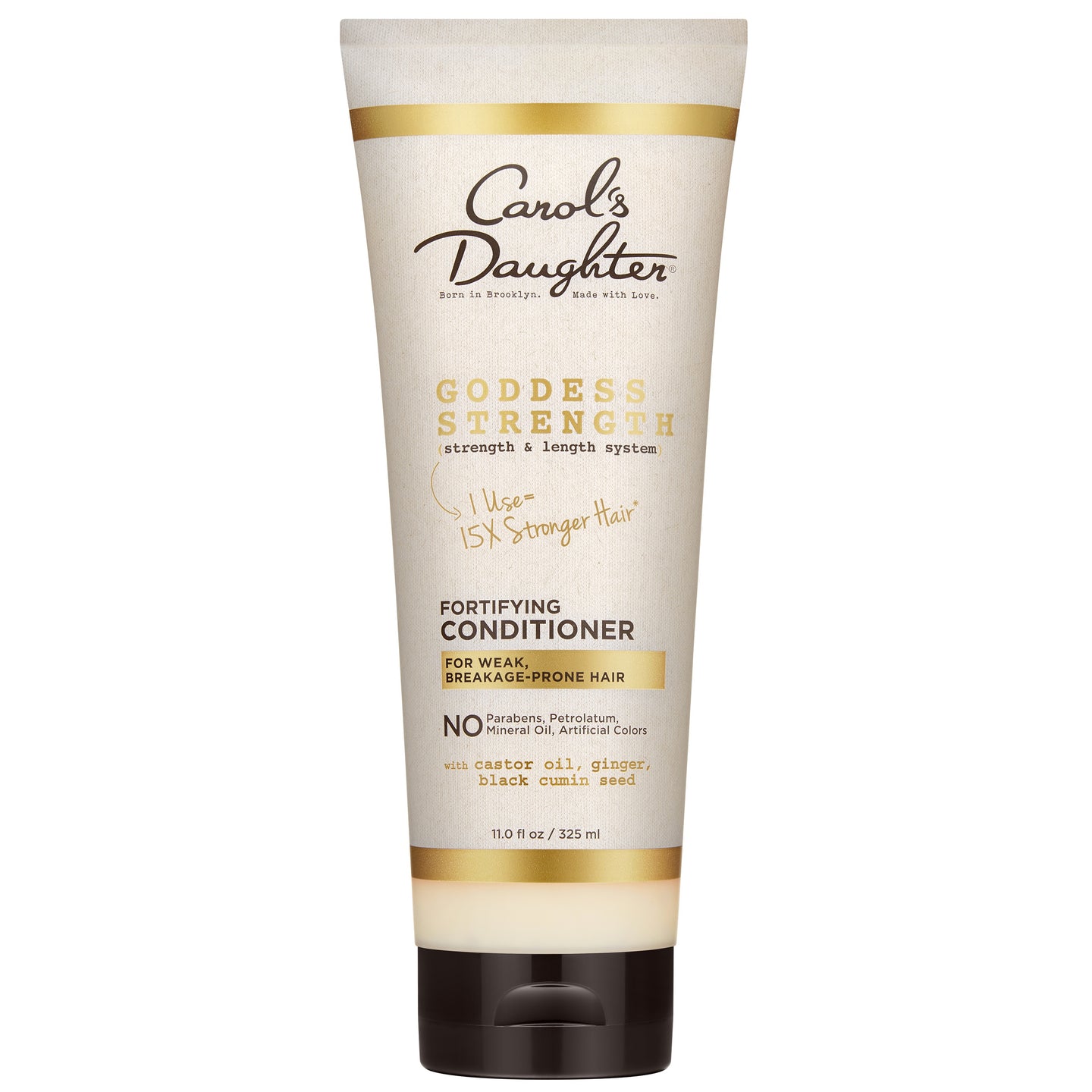
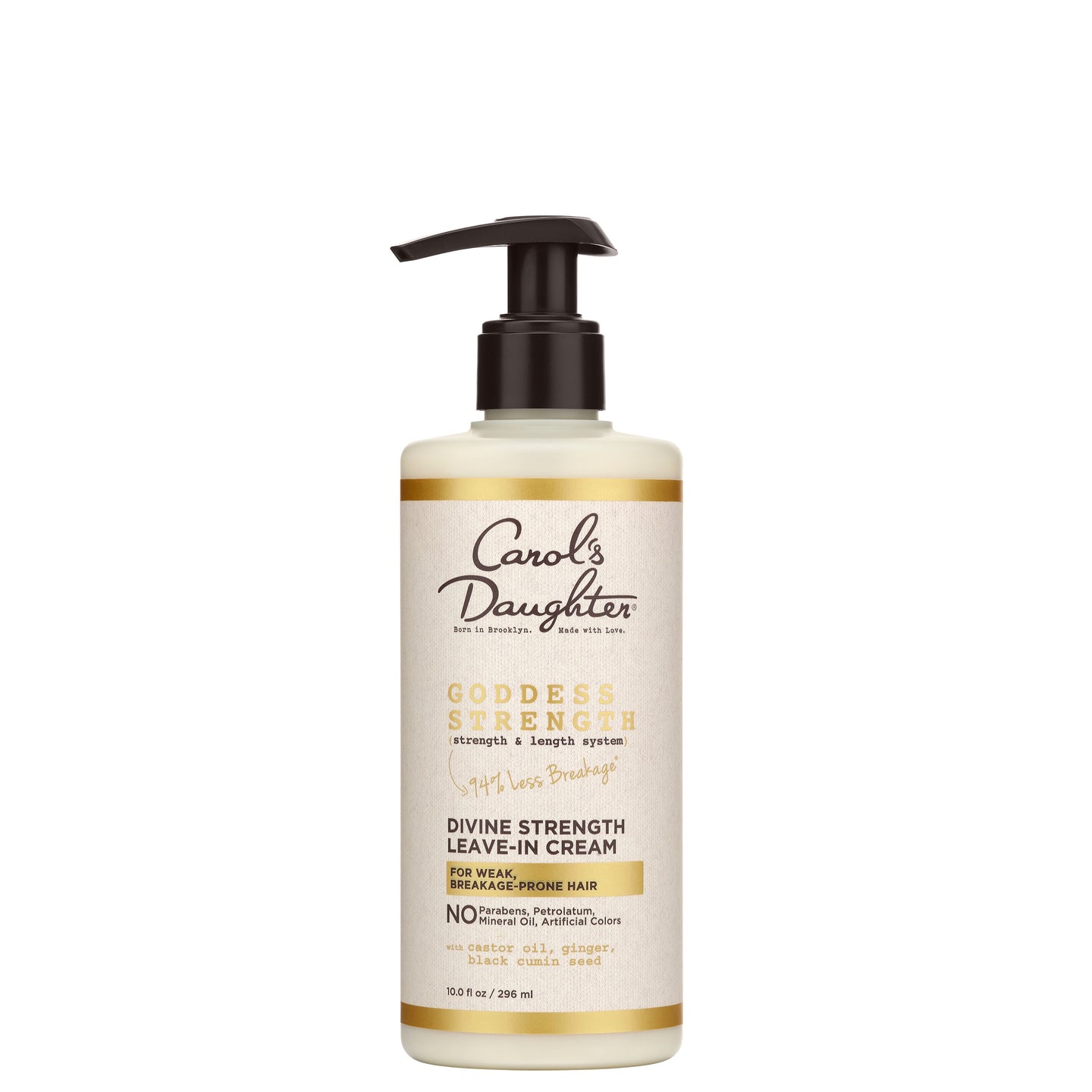
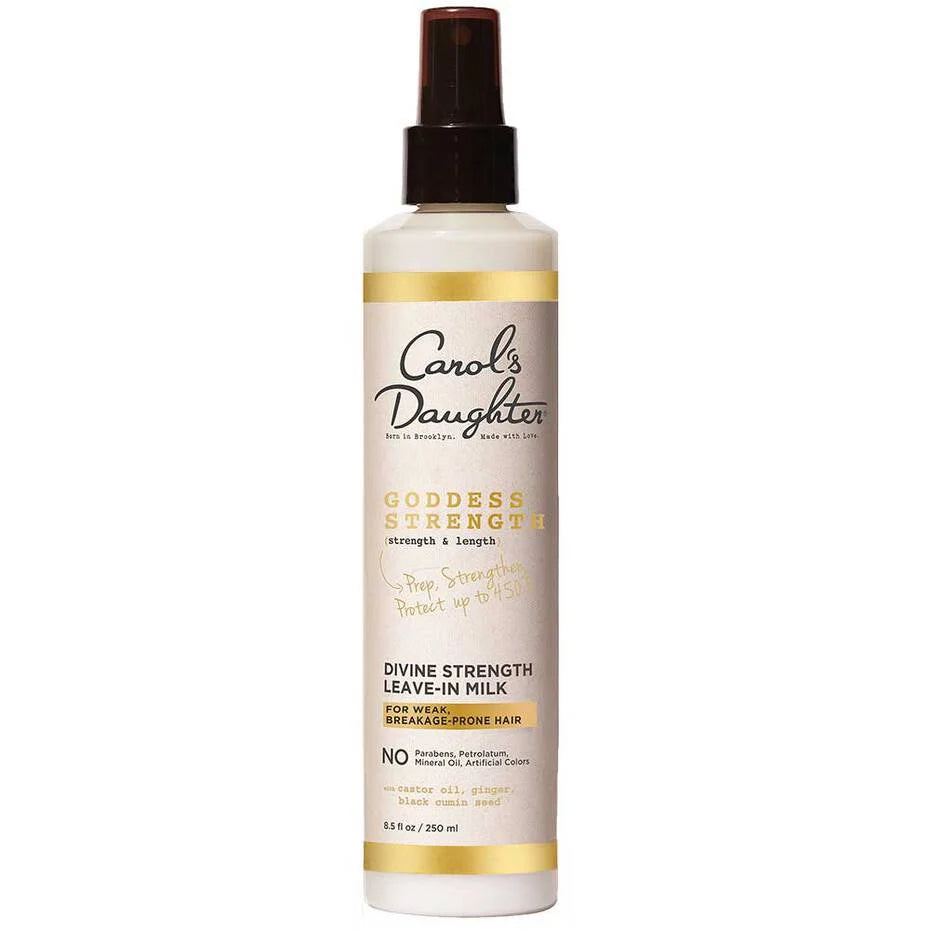
- The Goddess Strength system if your hair leans toward strength needs
Keeping hair at medium porosity takes effort. Avoid going overboard with chemical processes or heat-styling too frequently — these practices compromise your hair's porosity over time.
How to Care for High Porosity Hair
High porosity hair is often damaged hair — the cuticle has been compromised by coloring, heat, or other treatments. The good news: it's easier to seal an open cuticle than to open a closed one.
Key Practices
- Use rich, sealing products that close the cuticle
- Layer moisture and seal it in with the LOC method
- Incorporate protein treatments occasionally to strengthen damaged areas
- Try acidic rinses (apple cider vinegar) to help close the cuticle
- Avoid further damage — minimize heat, color, and chemical processing while you repair
Best Products for High Porosity Hair
- Born to Repair Nourishing Conditioner with Shea Butter — buttery formula that closes the cuticle
- Born to Repair Reviving Hair Oil with Shea Butter — seals moisture deeper and reduces frizz
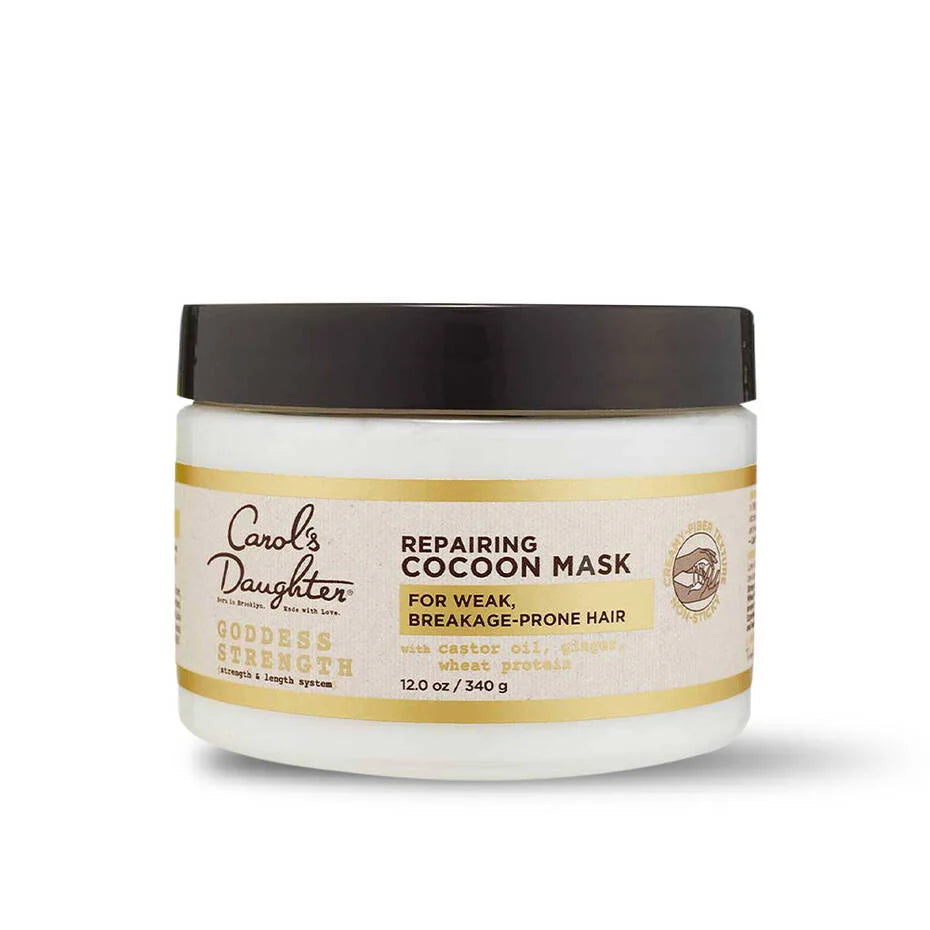
- Goddess Strength Cocoon Hydrating Hair Mask — weekly deep treatment with reparative ingredients
Browse the full Born to Repair collection for the repair-focused system designed for high porosity hair.
For more on heat-damaged hair specifically (a common cause of high porosity), see our complete guide to repairing heat-damaged curly hair.
Does Hair Porosity Matter?
Yes — significantly.
Porosity determines:
- Which products work and which don't
- How you should apply products (sectioned, with heat, etc.)
- Which styling techniques are effective
- How to recover from damage
- How often you can use chemical treatments
If you don't have time for the water test, you can identify your porosity by how your hair interacts with products:
- Products sit on top, hair stays dry: Low porosity
- Products absorb easily, hair feels balanced: Medium porosity
- Products absorb fast but hair still feels dry by end of day: High porosity
Also note: you may have different porosities on different parts of your head — especially common in multi-textured hair or hair with localized damage (e.g., highlighted strands that are more porous than the rest).
For broader hair guidance, see our complete guide to taking care of curly hair.
Frequently Asked Questions About Hair Porosity
Can my hair have multiple porosities?
Yes — and it's common, especially in multi-textured hair. The crown might be low porosity while the ends (older, more damaged hair) are high porosity. Test strands from multiple parts of your head to identify your overall pattern.
Can porosity change over time?
Yes. Damage (chemical, heat, environmental) can shift hair from low or medium to high porosity. Healthy practices (less heat, fewer chemicals, regular deep conditioning) can help restore high porosity hair toward medium.
Is porosity the same as curl type?
No — they're independent characteristics. Curl type is about the shape of your strands. Porosity is about how the cuticle behaves. You can have 4C hair with low porosity, or 4C hair with high porosity — same curl type, different needs.
Does shampooing affect porosity?
Aggressive sulfate shampoos can damage the cuticle over time, increasing porosity. Sulfate-free shampoos preserve cuticle integrity better. For more, see our complete guide to sulfate-free shampoo.
Why is my hair high porosity if I've never colored it?
High porosity can be genetic, or it can come from heat damage, sun exposure, harsh products, or chemical-free physical damage (rough brushing, friction from cotton pillowcases, etc.). It doesn't always trace back to coloring.
Can I make my hair less porous?
You can't fundamentally change genetic porosity, but you can manage porosity. High porosity hair can be temporarily sealed with products and treatments. Low porosity hair can be temporarily opened with heat and steam. Both are routine adjustments rather than permanent changes.
Why is medium porosity considered ideal?
Medium porosity hair both absorbs and retains moisture well — no special techniques required. Most products are formulated assuming medium porosity, so the routine is simpler.
Does porosity affect how often I should wash?
Indirectly. Low porosity hair gets product buildup faster (since products don't absorb) so it may need slightly more frequent cleansing. High porosity hair is often more fragile, so gentle washing is essential. For the full breakdown, see our complete guide to washing curly hair.
Ready to upgrade your routine for your porosity?
For all porosity types → Shop the Born to Repair collection
For sulfate-free shampoos → Shop sulfate-free shampoos
For deeper low-porosity guidance → Read our complete guide to low porosity hair
Not sure where to start? → Take the Curl Quiz